A paddle board seat turns a board into a slow, stable kayak. That is the honest description, and it is also the reason people buy one: not everyone wants to stand for three hours.
The catch is that sitting on a board only works if the seat holds your back upright. A cushion with a floppy backrest lets you slump, and slumping is what makes your lower back hurt after forty minutes.
There are two designs. Padded foam seats strap on with four webbing straps and cost around forty dollars. Inflatable seats lift you higher, which makes the paddle stroke work properly, and cost more.
We compared eight seats that fit standard board D-rings, and sorted them by how well they hold a paddling posture rather than how thick the cushion is.


The best paddle board seats at a glance
| Seat | Type | Attachment | Standout features |
|---|---|---|---|
| Freein Drop-Stitch SeatTop pick | Inflatable, 4 in high | 2 heavy duty straps | 18 x 18 in footprint, 600 lb capacity, non-slip base, rear pocket |
| Montekin Thickened SeatBest foam seat | Padded foam, high back | 4 adjustable straps | EVA lumbar backrest, deep drainage channels, detachable dry bag |
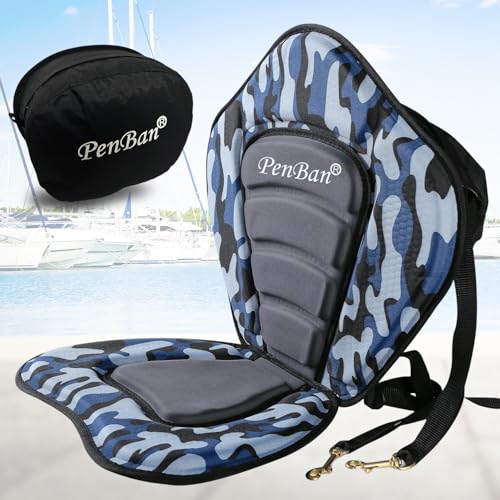
| PenBan Deluxe Seat CushionBest value | Padded foam, high back | 4 straps, 2 front 2 rear | EVA core with 210D shell, corrosion resistant hooks, storage bag |
| WOOWAVE Thickened SeatMost padding | Padded foam, high back | 4-way reinforced webbing | Grooved breathable cushion, EVA and 210D build, detachable bag |
| BKC UH-KS222 SeatMost durable | Soft padded, low profile | 4-way adjustable straps | Zinc plated hardware, sun resistant woven nylon, light |
| SereneLife Detachable SeatBest hardware | Padded foam, high back | 4 straps with copper hooks | Moulded EVA foam, form fitting for all body sizes |
| Pelican Sit-on-top SeatBest known brand | Water repellent nylon cushion | Web strap system to D-rings | Articulated design, 28 in front strap, 15 in seat back |
| Retrospec AerComfort SeatFor Retrospec boards | Inflatable | EasyLink connection system | Fits Weekender Plus, Tour, Crew and Dock models only |
The eight seats in detail
- Typehigh pressure drop-stitch inflatable
- Height4 in above the deck
- Footprint18 x 18 in
- Capacity600 lb
- Attachmenttwo heavy duty adjustable straps
- Extrasrear storage pocket, non-slip base
Best for: Anyone who wants to sit and still paddle properly
The problem with sitting on a board is that your hands end up near water level and the stroke becomes a reach rather than a pull. Height fixes that, and four inches is enough.
Drop-stitch is the same construction as the board itself, which is why it stays rigid under load rather than squashing to nothing after ten minutes.
Two straps rather than the usual four also matters more than it sounds, since most people give up on a seat because fitting it is fiddly. A shorter paddle completes the setup if you sit often.
Strengths
- Four inches of height changes the paddle angle completely
- Drop-stitch inflates rigid, so it does not compress like foam
- Two straps instead of six, which makes fitting quick
- Deflates flat and packs into the board bag
Weaknesses
- Fifty dollars and it needs a pump, though a board pump does it
- A hard base is less forgiving than foam on a long day
- Backresthigh density EVA foam with lumbar support
- Basethick cushion with deep drainage channels
- Storagedetachable water resistant zip bag
- Attachmentfour adjustable straps
- Fitshard and inflatable kayaks, canoes, paddle boards
Best for: Long sits where lower back support is the whole point
Foam seats live or die on the backrest. A flat padded rectangle lets you round your back, which is the fastest route to an aching afternoon.
The shaped EVA panel here holds the lower back, and the drainage grooves solve the second annoyance of foam seats, which is that they hold water.
The bag is genuinely useful on a board that has nowhere to put anything, though a proper dry bag is still the safer place for a phone.
Strengths
- Lumbar shaped backrest rather than a flat padded panel
- Drainage channels stop you sitting in a puddle
- Detachable dry bag holds keys, phone and a snack
- Fits kayaks and canoes as well, so it is not board specific
Weaknesses
- Fifty eight dollars, expensive for a foam seat
- Four straps take a few minutes to set up the first time
- BuildEVA foam interior with 210D polyester exterior
- Backhigh back padded, ergonomic shape
- Attachmentfour straps, two front and two rear
- Hardwarehigh grade corrosion resistant hooks
- Storagedetachable waterproof bag at the rear
Best for: A first seat, at the price where a seat is worth trying
Most of the padded seats on the market are the same product with different labels. What separates them is hardware, and the hooks here are better than the price suggests.
That matters because hooks are what rust. A seat with corroded clips is a seat you stop using in year two.
If you are unsure whether you want to sit at all, this is the right amount to risk finding out.
Strengths
- Thirty nine dollars with the same core construction as fifty dollar seats
- Corrosion resistant hooks, which is where cheap seats fail first
- Storage bag included rather than sold separately
- Straps adjust wide enough for almost any board
Weaknesses
- Foam compresses over a season of regular use
- No drainage channels, so it holds water after a swim
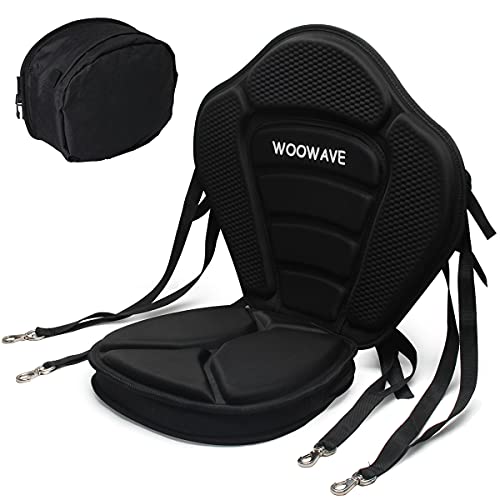
- Cushionthickened foam filled with a grooved breathable surface
- BuildEVA foam interior, 210D polyester exterior
- Backhigh back ergonomic design
- Attachmentfour-way reinforced front and rear webbing
- Storagedetachable back storage bag
Best for: Fishing, photography and anything that means sitting for hours
If you sit for four hours rather than forty minutes, cushion thickness stops being a comfort detail and becomes the whole product.
The grooved top is the part people underestimate. A flat foam pad in the sun gets hot and stays wet, and a channelled one does neither.
Accept that a thick seat makes the board feel less stable. Sitting higher always does.
Strengths
- The thickest cushion here, which tells over a long session
- Grooved surface breathes rather than trapping heat
- Reinforced webbing holds position better than plain straps
- Anti-slip base keeps it put on a wet deck
Weaknesses
- Sixty dollars
- Bulk raises your centre of gravity, so the board feels tippier

- Buildwoven nylon that resists sun fading and water
- Hardwarezinc plated alloy
- Profilelow, light, minimal bulk
- Attachmentfour-way adjustable straps
- Fitmost sit-on-top craft, small to X-large paddlers
Best for: Paddlers who leave kit outdoors and want it to survive
This is a kayak seat first, and it shows in the material choices. Sun fading and rust are what kill seats stored on a rack, and both are addressed here.
The low profile is a real advantage on a board. You sit closer to the deck, so the board stays as stable as it was without a seat.
Buy it for longevity rather than plushness. It is the least comfortable seat here on hour three and probably the only one still working in year five.
Strengths
- Zinc plated hardware and UV resistant nylon, built to last
- Low profile, so it barely affects stability
- Installs or removes in about a minute
- Fifty dollars from an established kayak brand
Weaknesses
- Less padding than the thick foam seats
- Backrest support is moderate rather than firm

- Buildmoulded EVA foam with polyester exterior
- Hookshigh grade copper metal
- Backhigh back padded ergonomic design
- Attachmentfour straps, two front and two rear
- Fitform fitting for all body sizes, also rowboats and fishing boats
Best for: Salt water paddlers who lose hardware to corrosion
Salt water is unforgiving about metal. Copper hooks cost the manufacturer more and are the reason this seat is worth a look over identical looking rivals.
Moulded rather than cut foam is the other difference. It keeps its shape through repeated soaking and drying, which is exactly what a board seat goes through.
You give up the storage pocket. If you already carry a waterproof waist pack, that is no loss.
Strengths
- Copper hooks rather than plated steel, which survives salt
- Moulded foam holds shape better than cut foam blocks
- Form fitting design works for both small and large paddlers
- Forty two dollars
Weaknesses
- No storage bag, unlike similarly priced rivals
- Plain looking and no drainage channels

- Materialwater repellent durable nylon
- Seat back15 in wide, 8 in tall
- Base17.5 in wide, 14 in deep
- Strapsfront extends to 28 in, back to 21 in
- Attachmentclips to D-rings, may need mounting kit PS1015-2
Best for: Boards with proper D-rings and paddlers who want a known brand
Pelican makes kayaks, and this is a kayak seat sold as board compatible. That works when your board has four well placed D-rings and less well when it does not.
Check the mounting kit note before buying. Needing PS1015-2 turns a sixty dollar seat into a seventy five dollar one.
The articulated back is the selling point. It moves with you as you rotate through the stroke rather than acting as a wall.
Strengths
- Articulated design that follows your back rather than fighting it
- Water repellent nylon dries fast and does not soak up lake water
- Long strap adjustment covers wide boards
- A real kayak brand with parts availability
Weaknesses
- May need a separate mounting kit, which is an extra purchase
- Thinner cushion than the foam seats at the same sixty dollars

- Typeinflatable seat
- AttachmentEasyLink connection system
- CompatibilityWeekender Plus, Tour, Crew, Crew XL, Dock and Dock XL
- Not compatiblelegacy Retrospec models
- Carewipes clean, packs down small
Best for: Owners of a current Retrospec Weekender board
This is the right seat for exactly one group of people. If you own a current Weekender, the connection system is better than any strap arrangement.
If you do not, it is unusable, and the compatibility list excludes older Retrospec boards as well as everything else.
Check your model against the list before ordering. That is the only real decision here.
Strengths
- Purpose built for the board, so the fit is exact
- EasyLink attaches faster than any strap system here
- Inflatable, so it packs down into the board bag
- Cushioning is genuinely comfortable for long trips
Weaknesses
- Only fits current Retrospec Weekender boards, and not legacy ones
- Seventy five dollars, the most expensive seat in this list
How to choose a paddle board seat
Height decides whether you can paddle: Sitting flat on the deck puts your hands at water level and turns the stroke into a shoulder exercise. An inflatable seat lifts you three or four inches and the paddle suddenly works. If you plan to cover distance seated, prioritise height over cushioning.
The backrest, not the cushion: Comfort over two hours comes from whether your back stays in a neutral position rather than from foam thickness. Look for a shaped lumbar panel; a flat padded rectangle lets you slump and slumping is what hurts.
Check your D-rings first: Every seat here attaches to four D-rings, and boards place them differently. Measure the distance between your front and rear rings and compare it with the strap adjustment range before ordering, since a strap that will not reach makes the seat useless.
Drainage and hardware: A foam seat with no drainage channels holds water and stays wet for days. And the hooks are the first thing to fail in salt water, so copper or plated alloy is worth paying for if you paddle the coast.
Accept the stability cost: Any seat raises your centre of gravity and makes the board tippier when you stand back up. Get on and off in shallow water the first few times, and rig a carry strap so you are not wrestling board and seat together at the car.
Frequently asked questions
Will any kayak seat fit my paddle board?
Usually, if the board has four D-rings in roughly the right places. The limits are strap length and ring spacing rather than the seat itself. Measure between your front and rear rings and check that against the seat's adjustment range, and be aware that some seats need a separate mounting kit.Foam or inflatable?
Inflatable if you want to paddle any distance sitting down, because the extra height makes the stroke work. Foam if you mostly want somewhere comfortable to rest, fish or watch, since it is cheaper, needs no pump and is more forgiving under you.Does a seat make the board less stable?
Slightly, because you sit higher than the deck. In practice it is barely noticeable while seated, since sitting itself lowers your centre of gravity a long way compared with standing. The awkward moment is standing back up with a seat in the way.Do I need a shorter paddle when sitting?
Yes, roughly 15 to 20 cm shorter than your standing length, or an adjustable paddle you can drop down. A standing length paddle used seated forces a high, inefficient stroke and tires your shoulders quickly.Bottom line
The Freein drop-stitch seat is the pick if you actually want to paddle while seated, because height is what makes the stroke work and a rigid inflatable base is the only way to get it. Two straps rather than four is a bonus you will appreciate every trip.
If sitting is about resting rather than covering distance, the Montekin foam seat gives you the lumbar support and drainage that cheaper cushions skip, and the PenBan does most of the same job for thirty nine dollars. Whichever you choose, check your D-ring spacing before you order.