A waterproof waist pack solves the small problem that ruins paddling days: where to put a phone, a key and some cash when everything you own is going to get wet.
The category splits by how it seals. Triple zip PVC pouches cost ten to twenty dollars and work well. Airtight roll or magnetic closures cost forty to seventy five and are what you buy when the phone inside is worth more than the bag.
One warning that applies to every pack here, and the manufacturers say it themselves: test it empty in a sink before you trust it with a phone. Seals get damaged, and you want to find that out on the kitchen worktop.
We compared eight waterproof fanny packs for paddle boarding, from a ten dollar two-pack to a fully submersible belt bag with a dry suit style zip.


The best waterproof fanny packs at a glance
| Pack | Seal | Capacity | Standout features |
|---|---|---|---|
| Drench Underwater Fanny PackTop pick | Airtight zip, IPX8 | Phone plus essentials | Dry diving suit zip technology, doubles as a phone pouch |
| niphean IPX7 Fanny PackBest closure | Magnetic, quad seal, IPX7 | 2.5 L | RF-welded seams, one-hand opening, four carry positions |
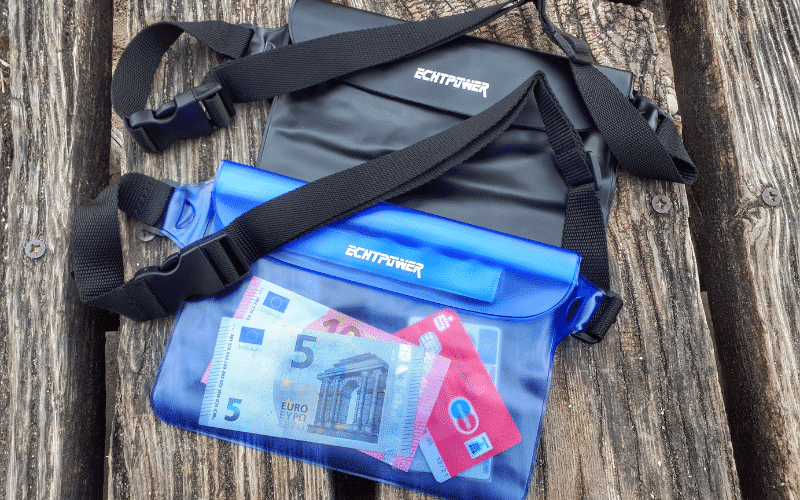
| HEETA 2-Pack Waterproof PouchBest value | Triple zip plus velcro | 9.0 x 6.7 in | Two pouches, touchscreen friendly, 22-33 in strap |
| Booe Waterproof Belt BagMost premium | TRU Zip airtight, IP67 | Phone plus valuables | Submersible to 1 m for 30 min, floats, four ways to wear |
| Rynapac 2 Pack IPX8 Fanny PackBest double pocket | IPX8, to 10 m | Two layers | Clear outer pocket for an 8.5 in phone, 1.5 in belt |
| Niveaya IPX8 Floating Fanny PackBest floating pack | Triple seal, IPX8 | Phone, passport, cash | Floats, 3.1 oz, widened adjustable strap |
| AiRunTech Waterproof Fanny PackDeepest rating | Triple zip lock, to 10 m | 8.5 x 5.8 in | Translucent and touchscreen friendly, adjustable waist |
| Crenova Waterproof Fanny Pack, 2 PackCheapest | Triple zip and velcro, IP68 | Compact | Two packs, floats, scratch resistant PVC |
The eight packs in detail
- Sealheavy duty airtight zip, dry diving suit technology
- RatingIPX8
- Usekayaking, snorkelling, boating, paddle boarding
- Functiondoubles as a waterproof phone pouch
- Fitmost smartphones
Best for: Anyone carrying a phone worth more than the bag
Most waterproof pouches seal with three zip strips and a velcro fold. It works, but the seal depends on you folding it correctly every time.
This uses an airtight zip of the sort used on dry suits, which either closes or does not, and that removes the human error.
It is still worth carrying a proper dry bag for anything bigger, and our dry bag comparison covers those. A waist pack is for the four things you want on your body.
Strengths
- An airtight zip rather than a fold-and-velcro closure, which is a different class of seal
- IPX8 rated and genuinely built for submersion
- Works as a phone pouch, so you can use the screen through it
- Well made enough to trust season after season
Weaknesses
- Thirty seven dollars
- A stiff airtight zip takes two hands and some effort to close
- Sealquad seal with RF-welded seams, magnetic buckle and sealing strip
- RatingIPX7
- Capacity2.5 L with an inner mesh pocket
- Materialtear resistant TPU
- Carrywaist, crossbody, shoulder or chest, 26-36 in
Best for: Paddlers who open and close the bag repeatedly on the water
Zips and velcro are awkward with cold wet hands on a moving board. A magnetic roll closure you can work one handed is a genuine improvement.
RF welding is the other thing worth paying for. The seams are fused rather than sewn, so there are no needle holes to seal in the first place.
Note the rating carefully. IPX7 covers a dunking, not thirty minutes underwater, which is fine for paddling and less so for snorkelling.
Strengths
- Magnetic closure works with one hand, on the water, in gloves
- RF-welded seams rather than stitched ones, so there is nothing to leak through
- 2.5 litres, easily the most usable capacity here
- Four carry positions, including a chest rig that sits above the water
Weaknesses
- Forty three dollars
- IPX7 means brief immersion, not sustained submersion like IPX8
- Sealthree zip locks plus a folding velcro top
- Size9.0 x 6.7 in, fits a 7 in phone
- Packtwo pouches
- Strapadjustable 22-33 in, fits 32.6-44.9 in waists
- Screentouchscreen friendly through the window
Best for: Most paddlers, most of the time, at the lowest sensible price
This is the pouch most paddlers should own. Thirteen dollars, two of them, and enough space for everything you want on your body.
Fold the top over at least three times and press the velcro down along its whole length. Nearly every reported leak in this style of pouch is a folding mistake.
Being able to use the screen through the window matters more than it sounds, since you never have to open the bag on the water to check the time or take a photo.
Strengths
- Two pouches for thirteen dollars, so one lives in each bag
- Large enough for a big phone plus passport and keys
- Touchscreen works through the window, so the phone stays sealed
- Triple sealing is genuinely effective when folded properly
Weaknesses
- The seal depends on you folding and pressing the velcro correctly
- PVC window scratches and clouds over time

- SealTRU Zip airtight zipper
- RatingIP67, submersible to 1 m for 30 minutes
- Buoyancyfloats if dropped
- Phonededicated pocket with a clear back panel
- Carrywaist, crossbody, sling or belt bag
Best for: People who want a bag that looks good off the water too
At seventy four dollars this is a lifestyle bag that happens to be properly waterproof, and if you will wear it off the water as well that maths works.
The floating claim is worth having. A sealed bag full of air floats, a sealed bag full of keys and a phone often does not, and the difference is design.
The sealing spec is honest: one metre, thirty minutes. That covers falling in and getting back on, which is the realistic paddling case.
Strengths
- Airtight TRU Zip, the most reliable closure type here
- Floats if it goes overboard, which not all packs do
- Dedicated phone pocket with a usable clear panel
- Looks like a normal belt bag rather than beach equipment
Weaknesses
- Seventy four dollars, by far the most expensive
- IP67 is one metre for thirty minutes, not unlimited depth

- RatingIPX8, submersible to 10 m
- Designdouble layer, transparent outer pocket
- Phonefits up to 8.5 in, full touchscreen use
- Belt1.5 in wide, elastic on one side and nylon on the other
- Fitwaists from 31 in
Best for: Big phones, and anyone who wants the phone separate from the keys
Keys and a phone in the same compartment is how screens get scratched. Two layers solve that for the price of a little bulk.
The 1.5 inch belt, part elastic and part nylon, is more comfortable than the thin webbing on cheaper packs, particularly over bare skin.
Phone sizes have grown, and plenty of older pouches no longer fit a current large phone. This one takes 8.5 inches, which covers everything on sale.
Strengths
- Two compartments, so keys do not scratch the phone screen
- The widest belt here, which stops it digging in
- Fits the largest current phones, up to 8.5 inches
- Two packs for twenty dollars
Weaknesses
- Twin layers make it bulkier on the waist
- Matte finish is harder to see through than clear PVC
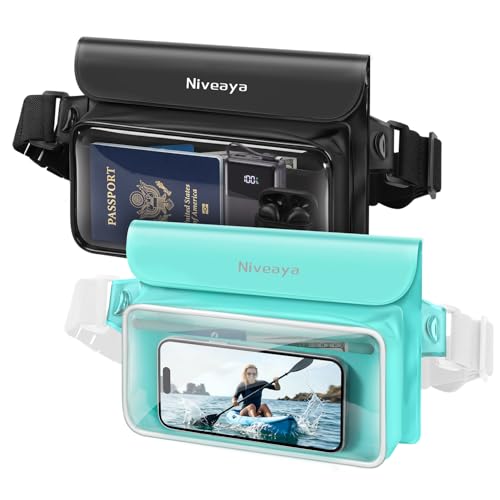
- Sealthree zip closure plus a top folding adhesive seal
- RatingIPX8
- Buoyancyfloats
- Weight3.1 oz
- MaterialPVC, scratch resistant
- Strapwidened and adjustable, multiple wearing positions
Best for: Paddlers who want the lightest pack that still floats
Three ounces is genuinely light, and a waist pack you stop noticing is a waist pack you actually wear.
Floating is the feature to look for at this price. Sinking is how most people lose a waist pack, usually while getting back onto the board.
The manufacturer's own advice is to test it before use. That is good advice for every pouch in this list, not just this one.
Strengths
- Only 3.1 ounces, so you forget you are wearing it
- Floats, which turns a dropped bag into an inconvenience
- Mezzanine layer separates small items from the phone
- Under eighteen dollars
Weaknesses
- PVC scratches over a season of sand
- A folding seal always depends on the user
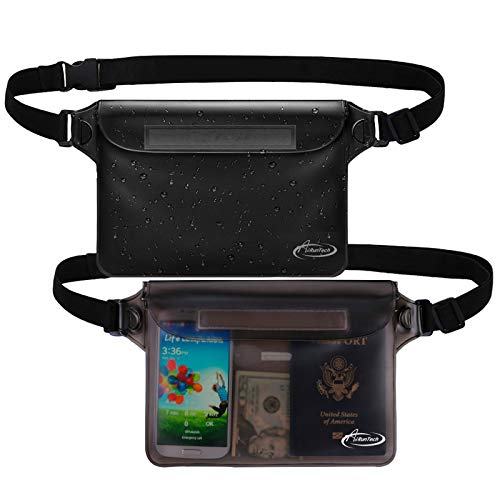
- Sealtriple zip lock
- Depthrated to 32 ft, about 10 m
- Size8.5 x 5.8 in
- Screentranslucent and touchscreen friendly
- Strapadjustable to most waist sizes
Best for: Snorkelling as well as paddling, where the bag goes properly under
Depth ratings on cheap pouches sound optimistic, but the construction here is the same triple zip design that has worked for years.
The window is translucent rather than clear. Calls and messages are fine, photographs through it are not.
At twelve dollars it is a sensible thing to own even if you also have a better bag, since the spare lives permanently in the car.
Strengths
- A 10 metre rating, deeper than most packs here need to be
- Translucent window still allows calls and messages
- Twelve dollars
- Compact enough not to get in the way of a paddle stroke
Weaknesses
- Smaller than the HEETA pouch, so a large phone plus a passport is tight
- Translucent rather than clear, so photos through it are poor

- Sealtriple zip locks with a velcro strip
- RatingIP68, submersible below 4.9 ft
- Buoyancyfloats
- Materialscratch resistant PVC, easy to clean
- Packtwo bags
Best for: A spare for the bag, or a pack for the whole family
Ten dollars for two is the entry point to the category, and the basics are right: triple zips, a velcro fold, and it floats.
The depth rating is modest at under five feet, which in practice covers falling off a board rather than diving with it.
Buy these as spares, or to hand out to whoever came along without one. For your own phone, spend more.
Strengths
- Ten dollars for two waterproof pouches
- Floats, and clean design with no unnecessary bulk
- PVC resists scratches better than the very cheapest pouches
- Small and light enough for a child to wear
Weaknesses
- Rated to under five feet, the shallowest here
- Compact, so a large phone fills it completely
How to choose a waterproof fanny pack
Understand the rating: IPX7 means immersion to one metre for thirty minutes, IPX8 means deeper or longer as specified by the manufacturer. Anything advertised only as "water resistant" is for rain, not for falling in. The IP code is a defined standard, so the number tells you more than the marketing does.
Closure type: A folded triple zip and velcro seal works well and costs little, but it depends on you folding it right every time. An airtight zip or a magnetic roll closure removes that variable and costs three times as much. If your phone is the expensive kind, pay for the better closure.
Does it float: Trapped air makes a sealed pouch float, but a heavy load can sink it. Packs that state they float have been designed with that in mind, and it is the difference between a dropped bag being an annoyance and being gone.
Phone size: Current large phones are up to about 6.9 inches, and a case adds more. Check the stated pouch size against your phone before buying, since older pouches were designed around much smaller phones.
Test it before you trust it: Fill it with kitchen roll, seal it, and hold it under water in the sink for a few minutes. Every manufacturer here recommends this, and it takes two minutes. Do it again at the start of each season, since seals harden and velcro wears.
Frequently asked questions
Can I use my phone through the pouch?
Through a clear PVC window, yes. Touch, calls and messages all work, and so do photos through the clearer pouches. Face recognition is unreliable through plastic, so set up a passcode before you go out. Underwater, touchscreens generally stop responding whether or not the phone is in a bag.Will it survive a fall in?
An IPX7 or IPX8 pouch will, provided it is sealed correctly. That is the main failure point: a fold that was not pressed down or a zip strip with sand in it. Rinse the seal with fresh water after salt use and check it before each trip.Waist pack or dry bag?
Both, for different things. A waist pack holds a phone, a key and some cash on your body where you can reach them. A dry bag on the board holds clothes, a towel and lunch. Trying to carry everything on your waist just gets in the way of the paddle stroke.Where should I wear it?
On your back or hip rather than on your stomach, so it does not catch your arms during a stroke. Several of these packs convert to a chest or crossbody position, which keeps the contents higher and out of the water when you are kneeling.Bottom line
Most paddlers should buy the HEETA two-pack at thirteen dollars, fold it carefully and be done. It carries a large phone, a passport and keys, the screen works through the window, and having a spare costs nothing extra.
If the phone in it is expensive, step up to the Drench with its airtight dry suit zip, or the niphean if you want a closure you can work with one hand on the water. Whichever you choose, test it in the sink before its first trip and again each spring, since the pouch is only ever as good as its seal. And keep it separate from the things that need a dedicated phone case on a lanyard.