

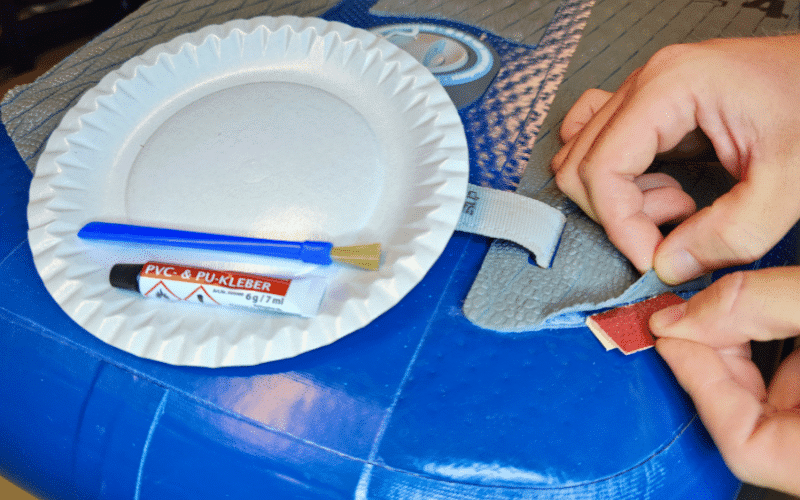
An inflatable board almost never fails catastrophically. What happens is a slow leak: firm on Saturday, soft by Sunday afternoon, and nobody can find the hole.
Nine times out of ten the fix is a two dollar dab of the right adhesive. The trick is knowing which adhesive, because household glue on PVC either peels off or attacks the material.
Two approaches work. A vinyl cement plus a PVC patch is the traditional repair, permanent and strong. A liquid patch fills the puncture with PVC that cures into the skin, with no patch at all, and is faster for pinholes.
We compared eight adhesives and repair kits that work on drop-stitch board material, and sorted them by which repair each one actually solves.


The best paddle board repair adhesives at a glance
| Product | Type | Contents | Standout features |
|---|---|---|---|
| JLF SUP Repair KitTop pick | Cement plus patches | 1 oz HH-66, 5 patches, valve wrench | 3 x 6 in raft grade PVC in white, grey, clear, blue and red |
| HH-66 Vinyl Cement 4 ozBest glue alone | Vinyl cement | 4 oz bottle with brush cap | Bonds from 35 to 95 F, penetrates PVC, made since 1949 |
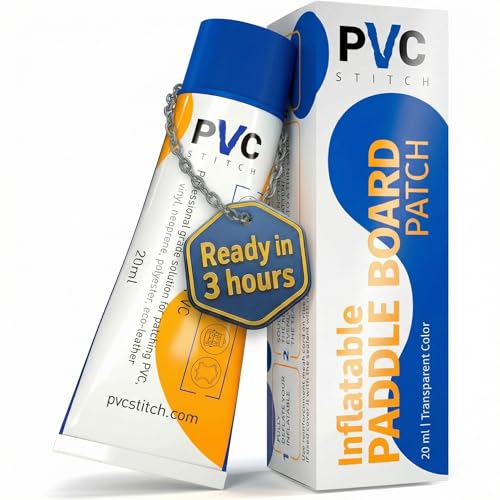
| PVC Stitch Paddle Board PatchBest for pinholes | Liquid patch | 20 ml tube | Salt water ready, UV resistant, no patch material needed |
| Gejoy Paddle Board Repair KitMost complete | Kit, two methods | 9 PVC patches, 20 TPU patches, 2 x 30 ml glue | Valve wrench and wool dauber included |
| SEA DOG Heavy Duty PVC KitBiggest patches | Kit with adhesive | 2 x 30 ml glue, 10 x 15 cm patches | Brushes, scraper and gloves for the full process |
| GEAR AID Aquaseal FDMost versatile | Flexible urethane adhesive | 0.75 oz tube | Cures to flexible rubber in 8 to 12 hours, dries clear |
| AquaPro Liquid Patch with CordBest for long tears | Liquid patch plus cord | 20 ml tube and PVC mesh cord | Cord bridges a tear the liquid alone cannot span |
| HH-66 Toluene Free 4 ozLowest fumes | Vinyl cement | 4 oz bottle with brush cap | Same formulation without toluene, for indoor work |
The eight repair products in detail
- Adhesive1 oz tube of HH-66 vinyl cement
- Patchesfive 3 x 6 in raft grade PVC, rounded edges
- Colourswhite, grey, clear, blue and red
- Toolsix prong valve tightening wrench
- Not forair mattresses, the PVC is too thick
Best for: Owning one kit that covers every likely board failure
Most slow leaks on a board are not holes at all. They are a valve that has worked loose, and a wrench solves that in ten seconds.
When there is a real puncture, the combination of HH-66 and thick raft PVC is the repair that professionals do. Rounded patch corners matter, since a square corner catches and lifts.
Keep it in the board bag rather than the garage. A kit at home is useless on the water, which is also true of a full repair kit.
Strengths
- The patch material is whitewater raft PVC, thicker than the usual pool patches
- Five colours, so the repair does not have to look like a scar
- Rounded edges, which is what stops a patch peeling from a corner
- Includes the valve wrench, and loose valves cause more slow leaks than punctures
Weaknesses
- Forty dollars, the most expensive option here
- Check your valve has six prongs, not eight, before relying on the wrench
- Typeprofessional grade vinyl cement
- Volume4 oz
- Working rangebonds from 35 to 95 F
- Applicationbuilt-in brush cap
- BondsPVC vinyl, vinyl coated fabrics, tarps and pool liners
- Originmade in Acton, Massachusetts since 1949
Best for: Anyone who already has patch material and wants the right glue
HH-66 is what raft outfitters and pool companies use, and it works on board PVC for the same reason: it softens the surface slightly and the bond becomes part of the material.
Thin coats on both surfaces, wait until tacky, then press. Thick coats are the single most common reason a home repair fails.
Use it outdoors or with a window open. The toluene free version below is the same glue for indoor work.
Strengths
- The industry standard for vinyl, used well beyond paddle boards
- Penetrates the PVC surface rather than sitting on top of it
- Four ounces is a lot of repairs, and it keeps if sealed
- Brush cap gives a controlled thin coat, which is how contact cement should go on
Weaknesses
- Contains toluene, so it needs ventilation
- Fifteen dollars for glue alone, with no patch material
- Typeliquid PVC that cures into a permanent patch
- Volume20 ml tube
- Colourtransparent
- Resistancesalt water ready, UV, heat and cold resistant
- Shelf lifetwo years
- Not fornylon based materials
Best for: Pinholes and small punctures, especially away from home
A liquid patch is the neater answer to the classic board problem: a pinhole you can hear but barely see. There is no patch edge to lift because there is no patch.
The cure is the constraint. The board has to be deflated, dry and flat, and it wants a few hours, so this is an evening job rather than a beach fix.
Sixteen dollars and the tube keeps for two years, which makes it cheap insurance to leave in the dry bag.
Strengths
- No patch material needed, so there is nothing to peel later
- Transparent, so the repair is close to invisible
- Salt water and UV resistant, which matters on a board left in the sun
- Small enough to live in a dry bag permanently
Weaknesses
- Only suitable for small damage, not tears
- Needs the board fully deflated and dry, which is awkward on a beach

- PVC patchesnine heavy duty
- TPU patchestwenty clear self adhesive
- Adhesivetwo 30 ml tubes
- Toolseight groove valve wrench and wool dauber
- Coversboards, kayaks, pool liners, air mattresses
Best for: Households with several inflatables to look after
The self adhesive patches are the interesting part. They are not the strongest repair, but for a small hole on the deck side they take a minute and hold.
For anything on a seam or under real pressure, use the PVC patches with the glue instead, and treat the stickers as a temporary measure.
Check which valve wrench you need. Boards come with six and eight groove valves, and this kit covers the eight.
Strengths
- Two repair methods in one box, glued PVC and stick-on TPU
- Twenty self adhesive patches make small fixes a one minute job
- Two full tubes of adhesive, enough for years
- Eight groove valve wrench, which suits boards the JLF wrench does not
Weaknesses
- Self adhesive TPU patches are not a permanent fix on high pressure seams
- Generic adhesive rather than a named cement like HH-66

- Adhesivetwo 30 ml tubes of professional grade
- Patchesoversized 10 x 15 cm PVC
- Toolsadhesive brushes, scraper and gloves
- Suitskayaks, boats, rafts, boards, tubes and floats
- Approachfull DIY process in one box
Best for: Larger damage where a small patch will not reach
Small kits assume small damage. A ten centimetre tear from a rock needs a patch with real overlap on every side, and most kits cannot provide it.
Overlap is the rule that gets ignored: at least two centimetres of sound material all round, or the patch peels from the edge under pressure.
Buy this for the bad day rather than the routine one, and keep something smaller for pinholes.
Strengths
- Ten by fifteen centimetre patches cover tears that need overlapping elsewhere
- Gloves and a scraper, which are the tools people improvise badly
- Two tubes, so a big repair does not run out mid job
- Works across every PVC inflatable you own
Weaknesses
- Patch material is boat grade, so colour matching a board is unlikely
- Overkill for a pinhole

- Typeurethane repair adhesive
- Volume0.75 oz
- Cure8 to 12 hours to a flexible rubber
- Finishdries clear
- Bondsneoprene, nylon, canvas, leather, rubber, GORE-TEX and PVC inflatables
- Resistanceabrasion and extreme temperatures
Best for: One tube covering the board, the wetsuit and the dry bag
This is the tube to own if you would rather carry one adhesive than four. It repairs a wetsuit seam, a dry bag and a board with the same product.
The trade is strength on PVC specifically. For a board seam under pressure, vinyl cement and a patch is the better repair.
Plan around the cure time. Aquaseal wants overnight, and rushing it produces a repair that fails on the first inflation.
Strengths
- Works on neoprene and fabric as well as PVC, which nothing else here does
- Cures flexible, so it moves with the material instead of cracking
- Dries clear and stays clear
- Nine dollars
Weaknesses
- Twelve hour cure, so it is never a quick fix
- Not as strong on PVC as a dedicated vinyl cement
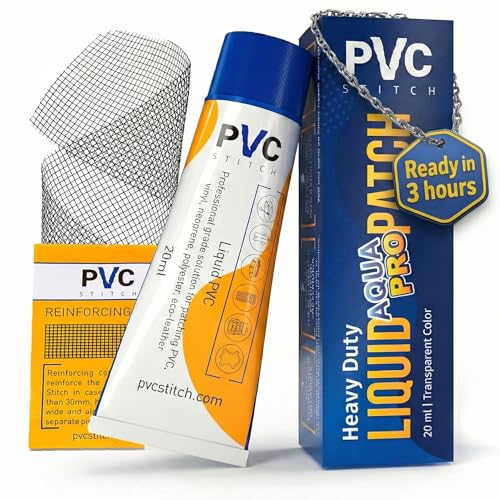
- Typeliquid patch with a reinforcing cord
- Contents20 ml tube plus PVC mesh cord
- Methodlay the cord into the tear, then seal with the liquid
- Resistancesalt water ready, UV, heat and cold
- Shelf lifetwo years
- Not fornylon based materials
Best for: Tears too long for liquid alone but awkward for a flat patch
Liquid patches struggle to span a gap. The mesh cord solves that by giving the liquid a structure to hold, which is the same idea as reinforcement in any composite repair.
It is genuinely usable away from home, which glued patches are not, since a proper glued patch wants clamping and time.
Practise on an old pool float before you need it. The technique is not obvious the first time.
Strengths
- The mesh cord bridges a tear so the liquid has something to grip
- Same weather resistance as the plain liquid patch
- Still invisible compared with a coloured patch
- Works in field conditions, unlike a full glued patch
Weaknesses
- Fiddly on a first attempt, and the cord wants careful placement
- Only sixteen dollars of product, which does not go far on big damage

- Typeprofessional grade vinyl cement without toluene
- Volume4 oz
- Working rangebonds in the same 35 to 95 F range
- Applicationbuilt-in brush cap
- BondsPVC vinyl, vinyl coated fabrics, tarps, liners
- OriginRH Adhesives, Massachusetts
Best for: Repairs done in a garage, a flat or anywhere with poor airflow
Toluene is what makes standard vinyl cement smell the way it does. Removing it makes indoor work realistic without changing the repair.
The bond is marginally slower to take, which in practice means waiting a little longer before pressing the patch down.
If your repairs happen on a balcony in January rather than in a garden in July, buy this version.
Strengths
- The same industrial vinyl bond without the worst of the solvent smell
- Twelve dollars, cheaper than the standard version
- Brush cap for controlled thin coats
- Safer around children and pets while curing
Weaknesses
- Slightly slower grab than the toluene version
- Still a solvent adhesive, so ventilation is not optional
How to choose a paddle board adhesive
Match the glue to the material: Board skins are PVC over a drop-stitch core, and PVC needs either a vinyl cement that penetrates the surface or a liquid PVC that becomes part of it. Cyanoacrylate superglue and epoxy both fail on flexible PVC, whatever the packaging says.
Find the leak before you buy anything: Inflate hard, then brush soapy water over the seams, the valve base and the fin box area. Bubbles show the hole. Half the leaks people blame on the skin turn out to be a valve that needs a quarter turn with a wrench.
Thin coats, and wait: Vinyl cement is a contact adhesive. Coat both surfaces thinly, let them go tacky, then press hard. A thick wet layer squeezed together is the classic failed repair, and it will let go on the second inflation.
Patch shape and overlap: Round the corners of any patch and allow at least two centimetres of sound material beyond the damage on every side. Square corners lift, and a patch with no margin peels from the edge as the board flexes.
Keep it where the damage happens: A repair kit in the garage never gets used on the water. A small liquid patch tube and a strip of PVC weigh nothing in the board bag, next to a spare fin and the valve wrench.
Frequently asked questions
Can I use superglue on my paddle board?
No. Cyanoacrylate cures hard and brittle, and board PVC flexes constantly under pressure, so the repair cracks and leaks again quickly. Use a vinyl cement with a PVC patch, or a liquid PVC patch made for inflatables.How do I find a slow leak?
Inflate to full pressure, mix washing up liquid with water and brush it over the valve base, the seams and the rails. Bubbles mark the spot. Check the valve first by tightening it with the wrench, since loose valves are the most common cause of a board that softens overnight.How long before I can use the board again?
Overnight for most repairs, and a full 24 hours is safer. Vinyl cement is usable sooner but reaches full strength over a day, and inflating too early is what turns a good repair into a repeat repair.Can I repair a seam?
Small seam leaks yes, with vinyl cement worked into the seam and a patch over it. A long seam separation is a warranty conversation with the manufacturer rather than a DIY job, because the whole rail may be affected.Bottom line
The JLF kit is the one to own if you buy a single thing, because it pairs HH-66 with raft grade patch material and throws in the valve wrench that solves most mystery leaks. Forty dollars is cheap against a board that will not hold pressure.
For pinholes, the PVC Stitch liquid patch is faster and neater, and it lives permanently in a dry bag. If you also own wetsuits and dry bags, add a tube of Aquaseal FD and you can fix nearly anything you take to the water.


