Choosing between paddle boards with 1 or 3 fins depends on your needs. Single-fin boards excel in speed and tracking, ideal for long distances and calm waters. Three-fin boards offer better stability and maneuverability, suitable for choppy conditions and surfing. The right choice varies based on your paddling environment, skill level, and goals.
It also decides what you can buy later. A replacement fin has to match the fin box on your board, which is where most upgrades fail rather than at the choice of shape.
- Single-fin boards are faster and better for straight-line stability, ideal for racing and long-distance touring.
- Three-fin setups enhance stability and maneuverability, making them suitable for beginners and rough water conditions.
- Boards with detachable fins offer flexibility, allowing customization for different paddling environments and skill levels.

Why do Fins on SUP Boards matter?
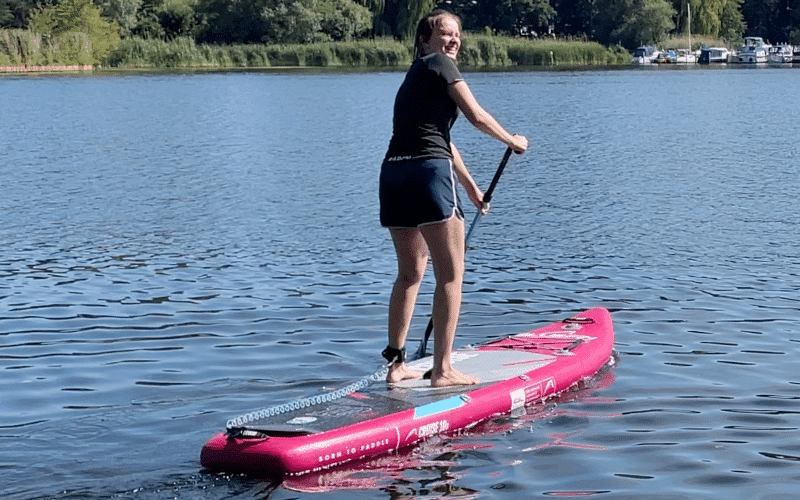
Fins play a pivotal role in the stability, direction, and overall performance of a SUP board.
They act as a stabilizing rudder in the water, helping to maintain a straight path and improving the board’s ability to maneuver.
The number and size of fins on a board significantly impact its speed, tracking, stability, and agility.
Single Fin SUP Boards: Speed and Tracking
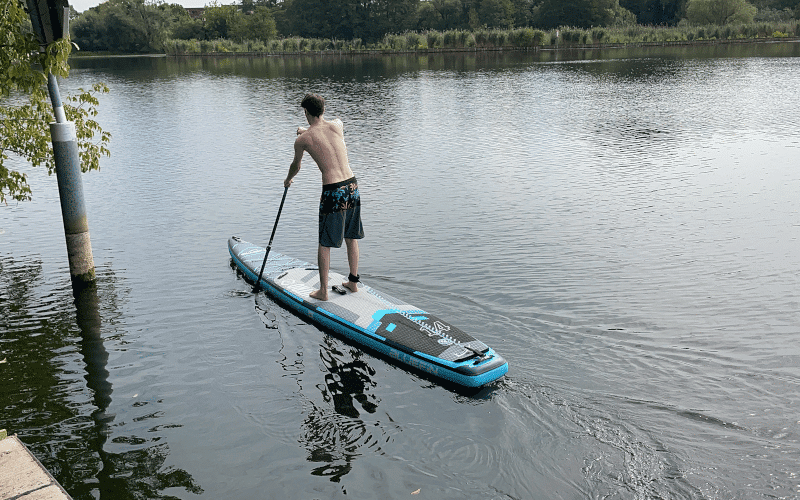
- Design and Performance: Single-fin SUP boards typically feature a large central fin. This design reduces drag, allowing for smoother and faster gliding over water. It’s ideal for straight-line paddling, making it a popular choice for long-distance touring and racing.
- Advantages:
- Increased Speed: Less resistance in water translates to higher speeds.
- Better Tracking: A single large fin offers superior straight-line stability, reducing the need for frequent paddle switches.
- Limitations:
- Reduced Maneuverability: Turning can be more challenging, especially for beginners.
- Less Stability: They might be less stable, especially for new paddlers, in choppy conditions.

Three-Fin SUP Boards: Stability and Maneuverability
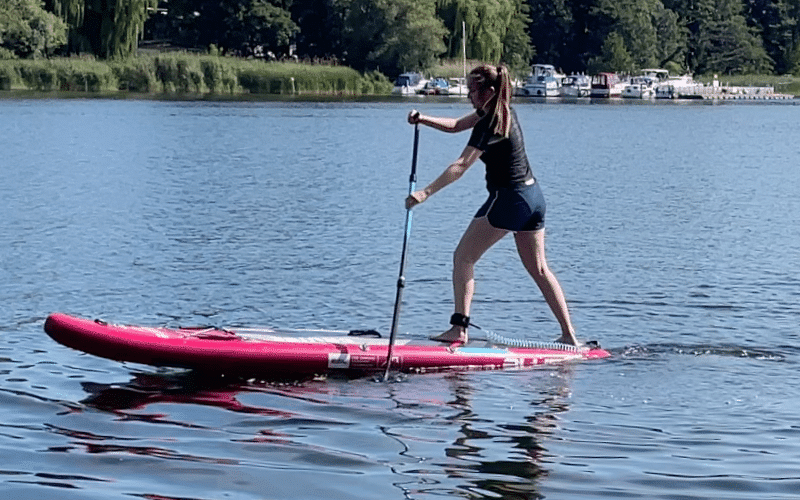
- Design and Performance: Three-fin setups typically consist of a larger central fin flanked by two smaller side fins. This setup offers a good balance between straight-line tracking and maneuverability.
- Advantages:
- Enhanced Stability: The wider fin spread offers better stability, particularly for beginners or in rough waters.
- Improved Maneuverability: Easier to make sharp turns and navigate through waves.
- Limitations:
- Lower Speed: The increased drag can reduce the board’s overall speed.
- Less Effective Tracking: More effort may be required to keep the board on a straight path.

Table: Fin Setups Compared
Everything below in one view. Read the row you paddle in, not the one you aspire to.
| Setup | Tracking | Turning | Speed | Shallow water | Best for |
|---|---|---|---|---|---|
| Single center fin | Best | Slowest | Fastest | Poor, the fin is deepest | Touring, racing, long flatwater lines |
| 2+1, all three fins | Good | Best | Slightly slower | Poor | Beginners, chop, rivers, wave riding |
| Twin, side fins only | Weakest | Very good | Medium | Best, nothing hangs deep | Shallow lakes, weed, sandbars |
| No fin | None | Spins | Slow | Unlimited | Nothing, the board will not hold a line |
Fin Boxes: What Actually Fits Your Board
Buying a replacement fin fails on the box, not on the shape. Three systems cover almost the entire market.
- US fin box: the long slot with a screw and a square plate. Universal, cheap, fits the widest choice of fins, and the plate is the part people lose.
- Slide-in or click fin: a tool free tab that snaps into a moulded channel. Fast, but the fin has to come from the same brand or a declared-compatible one, which is why a cheap replacement often does not seat.
- Snap-in side fins: the two small fins, usually pushed into a moulded pocket without a screw. They are the ones that vanish on a gravel launch.
If you are replacing rather than upgrading, our SUP fin comparison sorts by box type, and the Eisbach Riders quick lock fin is the one we tested against a standard US box fin.
Does the Fin Setup Change the Board You Should Buy?
Less than the marketing suggests. Fin count changes how a board behaves at the margins, while length, width and volume decide whether you stay dry, and those you can look up in the SUP sizing chart. A beginner on a correctly sized board with a single fin has a better day than an experienced paddler on a board that is too small with three. Racing is the exception, because the classes are defined by board length rather than by fins, as the ICF stand up paddling rules set out.
Choosing the Right Fin Setup
#1 Consider Your Paddling Environment
- Flatwater and Long Distances: A single-fin board is more suitable for calm waters and long straight routes.
- Choppy Waters and Surfing: Three-fin boards offer better stability and agility in rough waters and for wave riding.
#2 Assess Your Skill Level
- Beginners: A three-fin setup is generally recommended for beginners for its stability and ease of control.
- Advanced Paddlers: Experienced paddlers might prefer the speed and tracking efficiency of a single-fin board.
#3 Think About Your Paddling Goals
- Racing and Touring: If speed and distance are your goals, a single-fin board is ideal.
- Recreational Paddling and Surfing: For a versatile experience, including wave riding, opt for a three-fin setup.
Alternative: Detachable Fins
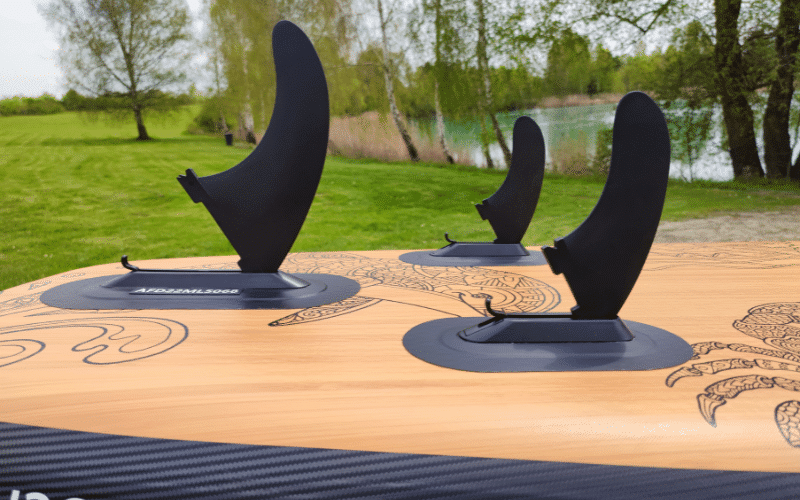
Recently, the SUP market has seen the introduction of boards with all fins being detachable.
This innovative feature eliminates the need to choose between a single-fin or a three-fin setup, you can now have the best of both worlds.
2+1 Fins: These versatile boards usually come with two smaller side fins and a larger center fin, a configuration known in the industry as the “2+1 fin setup.” This design allows you to tailor the board’s behavior to different situations, offering a high degree of flexibility.
Check here our reviews of the best SUP fins
Advantages of Removable Fins
- Adaptability: Easily switch between different fin configurations to suit your environment and paddling style.
- Reduced Packing Size: Detachable side fins mean a smaller packing size, making the board easier to roll up, transport, and store.
- Fin Protection: Removable fins are less likely to be damaged and can be replaced if necessary, extending the life of your board.
Which Fins to Fit, and When
- Single Fin (Center Fin): Ideal for emphasizing tracking and speed, this setup is best suited for longer and mostly straight routes. You can paddle longer on one side before needing to switch, achieving a faster pace.
- Twin Fins (Side Fins): In shallow waters, you might opt for just the two smaller side fins. This reduces the risk of grounding and offers high maneuverability. This arrangement, occasionally seen in surfboards, is known as the “Twinser” setup.
- Three Fins (2+1 Setup): Mounting all fins provides the highest stability and ease of turning, perfect for varied and short routes. This setup gives you maximum control over your board in most situations, highlighting the versatility of an all-around board.
Conclusion
Single fin for distance, three fins for waves and chop, and detachable side fins if you do not yet know which of the two you are. That last option costs nothing extra on most inflatables and is the reason so many all-around boards ship as a 2+1.
Before buying a replacement, measure the box rather than the fin. A US box, a click-fin box and a moulded side fin are three different purchases, and the shape of the blade is the smaller half of the decision.

FAQ
Can I paddle a SUP board without fins?
No, you can not paddle a SUP Board without fins. Maintaining direction and stability is almost impossible without fins.
Are single-fin SUP boards faster than three-fin boards?
Yes, single-fin boards are designed for speed and reduced drag.
Which fin setup is better for SUP surfing?
A three-fin setup is better for surfing due to its enhanced maneuverability and stability in waves.