

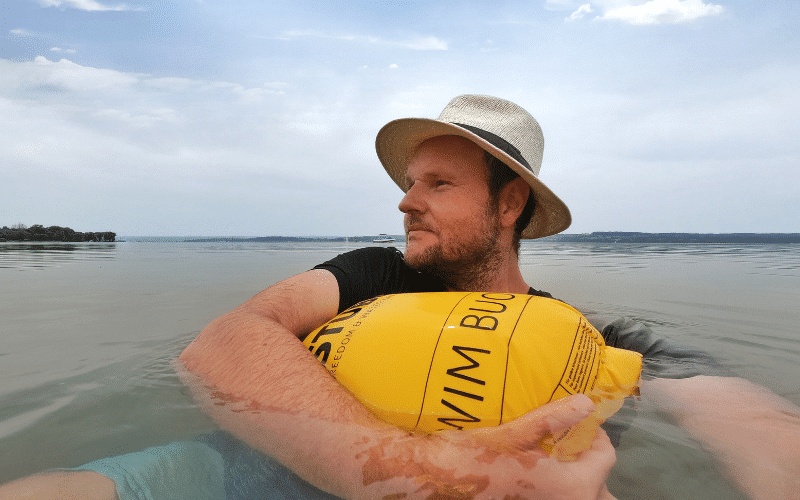
A swim buoy is a bright bag of air on a waist belt, and it does two jobs that paddlers care about.
The first is being seen. A head in open water is almost invisible to a boat at two hundred metres, and a neon orange buoy is visible at a kilometre. The second is having something to hold onto if you cramp, get tired, or lose your board.
Most models also double as a dry bag, which is why they show up on paddle boards as often as they do around swimmers. Phone, keys and a dry shirt go inside, the buoy tows behind, and it floats whether or not anyone is swimming.
We compared nine buoys from thirteen to forty dollars and separated the ones built for storage from the ones built purely for visibility.


The best swim buoys at a glance
| Buoy | Capacity | Dry storage | Standout feature |
|---|---|---|---|
| New Wave Swim BuoyTop pick | 15 L | Yes | The reference model, PVC, waist belt and tether |
| Hikeen Swim Buoy 20LBest value | 20 L | Yes | IPX7 touchscreen phone compartment |
| HIEMAL32 Swim BuoyToughest build | 15 L | Yes | Nylon PVC armour, reflective detail, rest handle |
| New Wave Swim BubbleLightest tow | Float only | No | No dry bag, so the least drag of any here |
| Zoot Ultra Swim Safety BuoyBest known brand | 15 L | Yes | Triathlon brand, rated to 190 lb, 25 in long |
| Xterra Wetsuits Swim BuoySolid alternative | 15 L | Yes | Waist belt with tether line, PVC build |
| ProCase 35L Swim Buoy Dry BagMost storage | 35 L | Yes | Double airbag and detachable backpack straps |
| Sunlite Sports 2-in-1 BuoySimplest design | Compact | Yes | Waist strap fits 21 to 39 in |
| Abahub Swim Buoy 15LCheapest pick | 15 L | Yes | 10 oz, the lightest buoy in the comparison |
The nine swim buoys in detail
- Capacity15 litres
- MaterialPVC
- Storagesealed dry compartment
- Attachmentwaist belt with tether line
- Colourhigh visibility yellow, other colours available
- Also forkayakers, snorkellers, triathletes
Best for: One buoy that covers visibility and dry storage properly
Visibility is the entire argument for a swim buoy. A swimmer in a black wetsuit is effectively invisible from a boat, and so is a paddler who has come off the board in chop.
The dry compartment is what makes it useful on a board rather than only in a swim session. Phone and keys go in, and the bag floats when the board does not.
Treat it as visibility and storage, not as safety equipment. If you need buoyancy that holds an unconscious person face up, that is a life vest and nothing else.
Strengths
- The model the category was built around, so the sizing and belt are sorted
- Fifteen litres takes a phone, keys, wallet and a dry layer
- Bright enough that boat traffic changes course early
- Doubles as something to rest on if you cramp or tire
Weaknesses
- Thirty five dollars, near the top of the range
- The maker is clear that it is not a substitute for a life vest
- Capacity20 litres
- Materialhigh strength nylon PVC
- PhoneIPX7 rated compartment, operable through the window
- Handlerest handle on the buoy
- Closurezip on the phone pocket, roll top on the main bag
- Useswimming, kayaking, paddle boarding, snorkelling
Best for: Anyone who wants the phone reachable rather than buried
The phone window is the feature worth having. A phone sealed in a bag you cannot open in the water is a phone you cannot use in the situation you brought it for.
Test the seal at home before trusting it. Fill the compartment with a folded paper towel, submerge it in a sink for ten minutes and see what comes out damp.
If the phone matters more than the storage, a dedicated waterproof phone pouch on a lanyard is still the more reliable arrangement.
Strengths
- Twenty litres for less than the fifteen litre name brands
- Touchscreen window means the phone works without coming out
- Rest handle, which several pricier buoys omit
- Nylon reinforced PVC resists punctures better than plain PVC
Weaknesses
- A touchscreen window is a second seam and a second thing to fail
- Twenty litres inflated is bulky behind a slower swimmer
- Capacity15 litres
- Materialnylon PVC exterior armour
- Buoyancysupports up to 190 lb
- Visibilitycontrast assessed orange with reflective detail
- Handlerobust rest handle
- Hardwaremarine quality
Best for: Cold water swimmers and anyone using it year round
Buoys fail by developing slow leaks where the fabric folds, and a nylon armoured skin is the direct fix for that.
The stated 190 pound buoyancy is the number to look for. Buoys that do not publish one are usually rated lower, which matters when the point is holding a tired adult.
Reflective panels earn their place in autumn, when swims and paddles start in half light and boat traffic sees colour late.
Strengths
- Armoured exterior is the answer to the pinhole leaks plain PVC develops
- Reflective detail works at dawn and dusk, when plain colour does not
- Rest handle rated to hold a full adult
- Buoyancy figure is stated rather than implied
Weaknesses
- Thirty nine dollars, the second priciest here
- Fifteen litres, so no more storage than cheaper bags

- Typefloat only, no dry bag compartment
- MaterialPVC
- Dragtows without pulling back
- Attachmentwaist belt and tether
- Colourorange
- Purposevisibility and rest, nothing else
Best for: Training swims where nothing needs carrying
This is the same buoy with the bag removed. For lap style training in a lake, that is exactly right: less bulk, less drag, same colour in the water.
For a paddler it is usually the wrong choice, since the storage is half of why the thing is on the board.
Buy it if you already carry a dry bag strapped to the deck and only want the visibility.
Strengths
- No storage compartment, so it is the lightest and slimmest tow here
- Less to inflate and less to go wrong
- Same visibility as the full sized buoy
- Cheaper than the drybag version by five dollars
Weaknesses
- Nothing goes inside, so keys and phone need another solution
- Only slightly cheaper than the version that does carry things
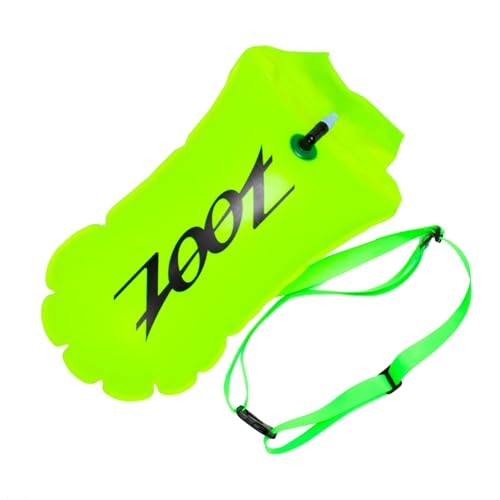
- Capacity15 litres, single chamber
- Materiallightweight PVC
- Buoyancyrated for swimmers up to 190 lb
- Size25 in long
- Attachmentadjustable waist belt and connecting strap
- Inflationquick inflate and deflate valve
Best for: Triathletes who already own the brand's kit
Single chamber construction is the trade against the ProCase double bag. It is lighter and simpler, and it has no redundancy at all.
For most swimming that is acceptable, since a buoy deflating is inconvenient rather than dangerous when a shoreline is close.
Yellow against orange is a real difference in low sun. Orange disappears into a sunset; neon yellow does not.
Strengths
- Established triathlon brand rather than an anonymous listing
- Fast valve, which matters when you inflate it at every session
- Neon yellow reads better than orange against sunset water
- Rated buoyancy figure published clearly
Weaknesses
- Forty dollars, the most expensive buoy compared here
- Single chamber, so one puncture deflates the whole thing

- Capacity15 litres
- MaterialPVC
- Attachmentwaist belt with tether line
- Colourorange
- Suitspoint to point swims, kayaking, snorkelling
- Weightlight enough to carry on a board
Best for: The same specification as the top pick at a slightly lower price
This is the straight alternative to the top pick and there is little to separate them. Buy whichever is cheaper on the day.
Point to point swimming is where the storage becomes essential: your shoes and keys start at one beach and you finish at another.
The same logic applies to a downwind paddle, where the car is at the far end and everything you need travels with you.
Strengths
- Twenty nine dollars for the standard 15 litre format
- Belt and tether are the proven arrangement
- A wetsuit brand, so the material choice is informed
- Designed with point to point swims in mind, where storage matters most
Weaknesses
- Nothing distinguishes it from the New Wave beyond price
- Plain PVC, without the nylon armour of the HIEMAL32

- Capacity35 litres
- Chambersdouble airbag design
- Strapsdetachable shoulder straps, convert to a waist belt
- Storagedry compartment separate from the air chambers
- MaterialPVC
- Useswimming, paddling, kayaking, rafting, camping
Best for: Carrying real gear rather than a phone and keys
The double airbag is the genuinely useful part. A single chamber buoy with a leak is an empty bag, and this one keeps floating on the second chamber.
At thirty five litres it stops being a swim buoy and becomes a floating dry pack, which is what most paddlers actually want.
Strapped to the deck rather than towed, it is one of the better dry bags on this site at the price, and it floats visibly if it goes overboard.
Strengths
- Two air chambers, so one puncture does not sink the load
- Thirty five litres takes clothes, shoes, towel and lunch
- Straps convert between backpack and swim belt
- Twenty five dollars, cheap for the capacity
Weaknesses
- Thirty five litres inflated is a lot of bag to tow
- Backpack straps are a compromise on the shoulders when loaded

- Typebuoy with a dry storage compartment
- Beltadjustable, fits 21 to 39 in waists
- Colourbright orange
- Contents it fitssunglasses, sunscreen, swim cap, goggles
- Materialwaterproof fabric
- Weightlight and compact deflated
Best for: Short swims where only small items travel with you
There is a size below which a buoy stops being a dry bag and becomes a pocket, and this sits there deliberately.
For a lake swim from the same beach you return to, goggles, keys and sunscreen is all that needs to travel.
Note the missing rest handle. Hanging on to a smooth inflated bag with cold hands is harder than it sounds.
Strengths
- Twenty one dollars for buoy and dry bag together
- Belt range covers most adults without an extension
- Compact deflated, so it lives in a board bag
- Storage sized honestly for small items rather than overstated
Weaknesses
- Less capacity than the 15 litre buoys, so no dry clothes
- No rest handle, which the better buoys include

- Capacity15 litres
- Weight10 oz (290 g)
- Shapehydrodynamic, tows without snagging
- Storagephone, keys, gels and cash
- Colourneon orange
- Notethe maker states it is not a life vest
Best for: A second buoy, or a first one at the lowest price
Ten ounces matters more than it looks on a spec sheet. A light buoy sits higher and tows straighter, and a heavy one starts to yaw behind you.
What you give up is skin thickness. Treat it gently around fin boxes and gravel launches and it will last several seasons.
At this price it is reasonable to own two, so there is one permanently in the car with the belt leash and one at home.
Strengths
- Thirteen dollars, less than half the price of the name brands
- Ten ounces, the lightest buoy compared here
- Fifteen litres despite the price
- Shaped to tow cleanly rather than drag sideways
Weaknesses
- Light material means less puncture resistance
- Newer listing, so long term durability is unproven
How to choose a swim buoy
A buoy is visibility, not a life jacket: It keeps you visible and gives you something to hold. It will not turn an unconscious person face up and it is not certified to do anything. On a board, wear a vest or a belt pack and treat the buoy as the thing that makes you seen.
Decide whether you need storage at all: A float only bubble is lighter and tows better. A 15 litre dry bag carries a phone, keys and a dry layer. A 35 litre bag carries everything for a point to point trip and is bulky behind a swimmer. Match the capacity to the trip, not to the price.
Two chambers beat one: A single chamber buoy that develops a leak is finished for that session. Double airbag designs keep floating on the second chamber. If a buoy is carrying anything you care about, the redundancy is worth the extra bulk.
Colour matters in the light you actually paddle in: Orange reads well at midday and vanishes into a low sun. Neon yellow and reflective panels hold up better at dawn and dusk, which is when open water swimming and paddling are most pleasant and most dangerous.
Inflate it firm, not hard: A drum tight buoy strains its seams in the sun as the air expands, and that is where leaks start. Firm enough to float high and soft enough to press a thumb into is right, and let some air out before leaving it on a hot beach.
Frequently asked questions
Does a swim buoy replace a life jacket?
No. A buoy adds visibility and something to hold, but it is not a certified flotation device and it will not keep an unconscious person's airway clear. Most makers say so on the listing. On a paddle board, wear a vest or a belt pack and use the buoy for visibility and storage.Does towing a buoy slow you down?
Barely, if it is inflated firm and shaped to tow. A float only bubble is essentially unnoticeable. A 35 litre dry bag loaded with clothes does add drag, and in a crosswind it pulls to one side, which is the main reason to buy the smallest capacity that fits your gear.Is a swim buoy useful on a paddle board?
Yes, in two ways. It carries the phone, keys and a dry layer in something that floats, and it makes you visible if you come off the board in traffic. Clip it to the board or wear the belt, and keep it inflated so it does its job the moment you need it.How do I stop it leaking?
Rinse it in fresh water, dry it fully and store it deflated and loosely rolled rather than folded on the same creases. Most punctures come from gravel and fin boxes, so keep it off the ground at launches. Check the valve seal each spring, since that is where slow leaks usually begin.Bottom line
The New Wave buoy is still the one to buy if you want the thing that works without thinking about it: right size, right belt, right colour. The Hikeen at twenty four dollars gets you twenty litres and a usable phone window, and it is the better value if you can live with a newer name.
Buy the ProCase instead if the point is carrying gear across a lake rather than swimming laps, and remember what none of them are. In cold water the real risk is cold shock in the first minute, and a bright bag of air does nothing about that. A wetsuit and a proper vest do.


