

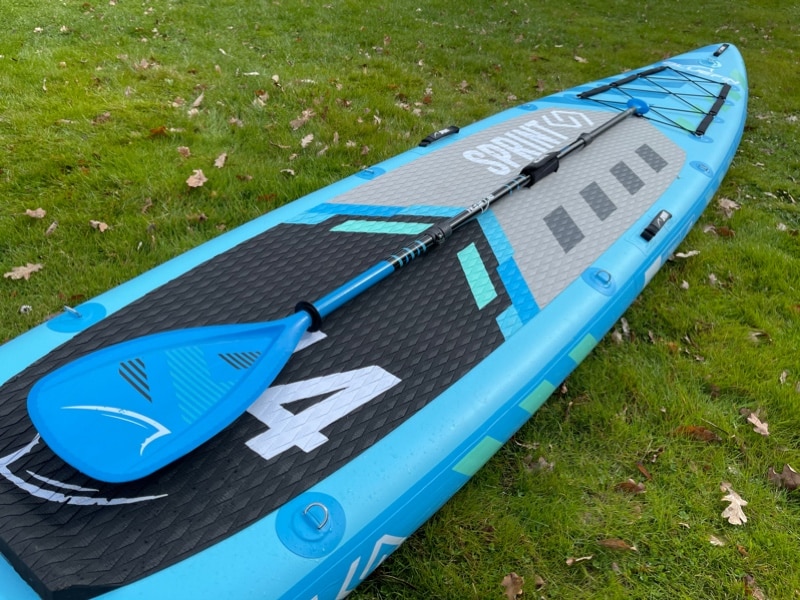
A touring board is longer and narrower than an all-round board, and every part of that shape exists to make the board hold a straight line over distance.
The two numbers that matter are length and nose shape. Twelve feet six is the classic touring length, and a pointed or V-shaped nose cuts through chop instead of slapping over it.
The trade is stability. A 30 inch touring hull is quicker than a 34 inch all-round board and less forgiving when you turn around to look at something.
We compared nine boards, from a 170 dollar entry board to a 949 dollar travel package, and split them by what kind of distance paddling they actually suit.


The best touring paddle boards at a glance
| Board | Size | Capacity | Standout feature |
|---|---|---|---|
| Niphean 12 ft 6 TouringTop pick | 12 ft 6 | 550 lb | V-hull touring nose at 20.39 lb |
| BOTE Breeze AeroBest premium | 11 ft 6 | Full kit | Rac System and MAGNEPOD mounting |
| Niphean PRO with SeatBest for gear | 12 ft 6 x 33 in | 600 lb plus | Carbon spine and a kayak seat |
| MOUNTOCEAN Artist SeriesFastest hull | 12 ft 6 x 31 in | Military-grade PVC | 31 in width and 8 D-rings |
| iROCKER Cruiser Ultra 3.0Best for travel | 10 ft 6 x 34 in | 19 to 21 lb | Bi-fold packdown, half the usual size |
| iTAOSTAR AdventureMost stable | 12 ft x 35 in | 450 lb | Five fins and a kayak conversion kit |
| SereneLife 12 ft 2 XLBest for two | 12 ft 2 x 34 in | 450 lb | Removable seat and 13 PSI woven core |
| ZLX 11 ft 6 x 33Best shorter tour | 11 ft 6 x 33 in | 28.2 lb packed | StabilTrac removable centre fin |
| FunWater Inflatable SUPBest value | Standard iSUP | Light PVC | 35 percent lighter double wall PVC |
The nine touring boards in detail
- Length12 ft 6
- Hullstreamlined touring nose with a V-hull
- Constructionwoven drop-stitch, up to 160 percent stiffer inflated
- Capacity550 lb
- Weight20.39 lb
- Kitpaddle, pump, leash, fins, backpack
- Warranty3 years
Best for: Your first real touring board, without a premium price
Most boards sold as touring are 11 ft all-round hulls with a pointed sticker. This one has the shape that actually matters, a narrow entry that slices chop instead of slapping over it.
Twenty pounds is the number to watch. A heavy 12 ft 6 board is a board that stays in the garage, because the walk to the water decides how often you go.
The included paddle is the weak part of the kit. A carbon shaft from our paddle guide is the single upgrade that changes how a long paddle feels.
Strengths
- A genuine V-hull touring shape rather than an all-round board sold as touring
- 20.39 lb is light for 12 ft 6, which matters on every carry
- 550 lb capacity covers camping gear, a dog or a second rider
- Woven drop-stitch, not the cheaper knitted core
Weaknesses
- Aluminium paddle rather than carbon
- A three year warranty means little from a small brand
- Length11 ft 6
- ConstructionAeroULTRA
- MountingBOTE Rac System and MAGNEPOD points
- Trackinglonger hull for glide and straight-line tracking
- Uselakes, rivers, bays and coastal water
- BrandBOTE
- Pricearound 799 dollars
Best for: Paddlers who keep a board for a decade
The case for a BOTE is not the specification sheet, it is that the seams, valve and drop-stitch core are still doing their job in year six.
The mounting system is the practical daily difference. A cooler, a rod holder or a magnetic cup mount attaches without threading anything through a D-ring.
At 11 ft 6 it is a touring board you can also use for an hour of messing about, which a narrow 12 ft 6 hull is less happy doing. Compare it with the boards in our performance board guide.
Strengths
- BOTE builds to a standard the sub-300 dollar boards do not approach
- The Rac and MAGNEPOD systems make accessories click on rather than strap on
- 11 ft 6 is a good compromise, quick enough to tour and easy to turn
- Resale value that budget boards simply do not have
Weaknesses
- 799 dollars
- Shorter than a dedicated 12 ft 6 tourer, so it gives up some glide
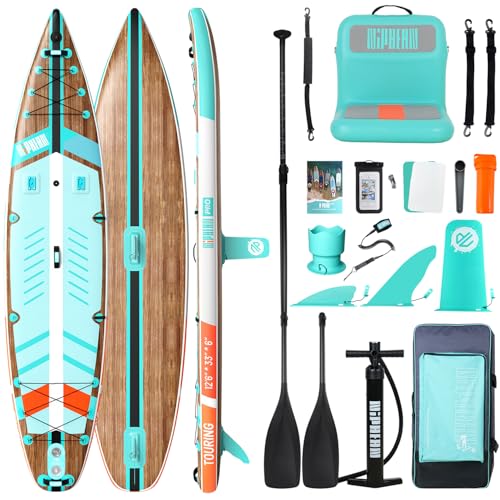
- Size12 ft 6 x 33 in x 6 in
- NoseV-nose streamlined shape
- Capacityover 600 lb
- Spinefull-length carbon fiber spine
- FinStabilTrac fin
- Seatinflatable ergonomic kayak seat, two straps
- Extrasmodular mounting bases and bungees at both ends
Best for: Loaded touring, camping trips and fishing
Flex is what kills a long inflatable. A 12 ft 6 board with a soft middle hinges under a standing paddler and every stroke loses energy to the bend.
The carbon spine addresses exactly that, and it is the reason this board can carry six hundred pounds without turning into a banana.
Bungees at both ends plus modular bases make it the obvious pick for overnight trips. Pack the load in dry bags and keep the heavy items just behind the handle.
Strengths
- Over 600 lb of capacity, the highest here by a clear margin
- A full-length carbon spine, which is what stops a long board flexing in the middle
- The kayak seat turns a headwind day into a paddleable day
- Modular mounts for rods, coolers and cameras
Weaknesses
- 460 dollars puts it against real brand boards
- 33 in wide, so it is slower than the 31 in MOUNTOCEAN

- Size12 ft 6 x 31 in x 6 in
- NoseV-shaped for glide and tracking
- Corehigh-density drop-stitch with military-grade PVC
- Rings8 D-rings for long-distance gear
- Kitdual-action pump, adjustable paddle, full accessory set
- SeriesArtist Series
- Warranty3 years
Best for: Distance paddling where speed is the point
Every inch of width you remove is speed you get back, and it is also stability you give up. Thirty one inches is the point where a confident paddler gains and a beginner suffers.
Paired with the V-nose this is the board of the group that rewards a long steady cadence, which is what touring actually is.
Take it out on flat water first. The difference from an all-round board shows up the moment you turn side-on to a wake.
Strengths
- 31 in is the narrowest board here, and width is what costs you speed
- A V-nose plus that width makes it the quickest hull of the group
- Eight D-rings, so gear stays where you put it over a long day
- Military-grade PVC at 320 dollars
Weaknesses
- 31 in feels tippy if you are coming off a 34 in all-round board
- No seat included, unlike the Niphean PRO

- Size10 ft 6 x 34 in x 6 in
- Weight19 to 21 lb
- Packdownbi-fold, packs 50 percent smaller
- Core6 in woven drop-stitch, dual-fused PVC, welded seams
- Finstwin-fin river setup with dual flip-lock fins
- Mounts2 MAGTITE magnetic and 2 action mounts
- Kitbackpack, 5-piece paddle, coil leash, Power Pump
Best for: Touring trips that start with a flight
This is on the list for one reason, which is that it fits in luggage. A 12 ft 6 tourer rolled normally fills a checked bag on its own.
The build is the best of the group. Welded seams instead of glued ones is the difference that shows up after a few hundred inflate cycles.
Accept the shape compromise. It will not keep up with the MOUNTOCEAN over five miles, but it is the board that actually arrives at the far lake. An electric pump is already in the box.
Strengths
- The bi-fold packdown is genuinely half the bulk of a normal rolled board
- 19 to 21 lb with an electric pump in the package
- Welded seams and dual-fused PVC, the best construction here
- Magnetic mounts that do not need a D-ring
Weaknesses
- 949 dollars
- 10 ft 6 x 34 in is an all-round shape, so it tours slowly compared with the 12 ft 6 boards

- Size12 ft x 35 in
- Capacity450 lb
- Finsfive removable, 3 centre and 2 side
- Kayakconversion kit with seat and paddle blade
- Mountsaction camera or phone mount, plus a flag
- Warranty3 years
- Guidebeginner guide included
Best for: Nervous paddlers who still want distance
Length gives glide and width gives confidence, and this board takes both rather than optimising for speed.
The five fin setup is more useful than it sounds. Three centre fins for tracking on open water, side fins removed for shallow rivers.
If you are bringing a dog along, the width plus the 450 lb capacity is the right combination. Our dog board guide covers what else changes.
Strengths
- 35 in wide, which is as stable as a long board gets
- Five fins, so you can tune tracking for flat water or river
- A real kayak conversion, not just a strap-on seat
- 450 lb capacity for a passenger or a dog
Weaknesses
- 35 in of width means it is the slowest 12 ft board here
- A five fin setup is more parts to lose

- Size12 ft 2 x 34 in
- Capacity450 lb
- Seatremovable seat included
- Corewoven drop-stitch with double-layer sides
- Pressureinflates to 13 PSI
- Fins3 bottom fins
- Kit3-piece aluminium paddle, leash, fin, repair kit, backpack
Best for: Two people, or one adult and a child
Family boards usually mean short and wide, which is exactly wrong for a paddle that lasts more than an hour. Twelve feet plus makes the difference.
Thirteen PSI is the number that matters more than the length. A board at 10 PSI with two people on it sags in the middle and drags.
Budget for a second paddle if two of you actually paddle. One aluminium paddle between two is the usual reason a family trip ends early.
Strengths
- 450 lb and 12 ft 2 handle two paddlers without wallowing
- 13 PSI on a woven core, which is a genuinely rigid board
- Under 260 dollars with the seat included
- Deflates into a backpack for off-season storage
Weaknesses
- A three-piece aluminium paddle is the cheapest part of the kit
- 34 in is wide, so solo distance is slower than on a 31 in hull

- Size11 ft 6 x 33 in
- Finremovable StabilTrac centre fin
- Corehigh-density drop-stitch
- Packed weight28.2 lb with accessories
- Designslender hydrodynamic profile for distance
- Backpackhigh-capacity durable backpack
- Also available10 ft 6 version
Best for: Two hour paddles rather than all-day expeditions
Not everyone needs 12 ft 6. If your paddles are an hour or two on a local lake, a shorter hull is easier to store, carry and turn.
The removable centre fin is the useful part. Keep it while you are learning, take it out when you want the board to feel livelier.
Watch the packed weight. At 28.2 lb it is heavier than the longer Niphean, which is a reminder that length is not what makes a board heavy.
Strengths
- 11 ft 6 x 33 in is the compromise size, quicker than all-round without the twitchiness
- The removable StabilTrac fin lets the board grow with you
- A proper backpack rather than the usual thin bag
- 250 dollars
Weaknesses
- 28.2 lb packed is heavier than the Niphean at 12 ft 6
- No seat and no touring nose
FunWater Inflatable Stand Up Paddle Board with Beginner SUP Accessories
Best value- Materialultra light double wall PVC, 35 percent lighter than similar boards
- Finsthree detachable
- Deckanti-slip EVA
- Handleergonomic centre handle
- Waterocean, lake and river
- Kitpaddle, fin, pump, backpack, leash, repair kit
- Pricearound 170 dollars
Best for: Finding out whether you like distance paddling at all
This is the honest entry point. It is not a touring board, but it is a light complete package for less than the cost of a good paddle.
The light PVC cuts both ways. Easy to carry, and less tolerant of being dragged across a gravel launch.
If you find yourself paddling five miles at a time, that is the signal to move up to a real touring hull. Until then this does the job.
Strengths
- Under 170 dollars with a complete kit, the cheapest way in
- 35 percent lighter PVC, so it is easy to carry
- Three detachable fins for different water
- FunWater sells in volume, so spares and support exist
Weaknesses
- Not a touring hull, so it will not track like the 12 ft 6 boards
- Thin PVC trades durability for the low weight
How to choose a touring paddle board
Length decides glide: Twelve feet six is the touring standard because a longer waterline carries a stroke further before it stalls. Below 11 ft you are on an all-round board, whatever the listing calls it, and you will pay for that with strokes over a long day.
Width decides everything else: A 31 in hull is noticeably quicker than a 34 in one, and noticeably less forgiving. If you have paddled less than a season, take the extra width and the extra minutes. If you are steady on a 32 in board in chop, go narrower.
Look at the nose, not the marketing: A pointed or V-shaped nose cuts through small waves. A blunt all-round nose rides over them and slaps, which is slow and wet. This one visual check filters out most boards sold as touring that are not.
Rigidity over headline capacity: A long inflatable that flexes in the middle wastes energy on every stroke. Woven drop-stitch, a carbon or fibre spine and a working pressure of 15 PSI matter more than a 600 lb capacity number. Check with a pump that reads pressure, because an underinflated board is the most common cause of a slow one.
Plan for the gear you will carry: Touring means bringing water, food and layers. Count the D-rings and bungee positions, and remember that anything you take out on the water should come back with you under Leave No Trace practice.
Frequently asked questions
Is a touring board harder to balance on?
Slightly, and mostly at the start. The difference between a 34 in all-round board and a 32 in touring board is a few sessions of getting used to it. Below 31 in the difference is real and you should have a season behind you.How much faster is a touring board?
On flat water and over distance, expect somewhere around a mile an hour more at the same effort, and much more in chop where the nose shape does the work. The gap widens the longer you paddle, because a touring hull is less tiring.Do I need a seat for touring?
No, but a seat changes what you can do in a headwind or on a long return leg. Sitting drops your wind profile and uses different muscles, which is why several of the boards here include one.Inflatable or hard board for touring?
Hard boards are faster and stiffer, and almost nobody stores or transports one easily. A modern woven drop-stitch inflatable at 15 PSI gets close enough that the storage and travel advantage wins for most paddlers.Bottom line
The Niphean 12 ft 6 is the pick because it is one of the few boards at this price with a genuine touring hull rather than an all-round shape with a pointed graphic, and at 20.39 lb it is light enough that the walk from the car never becomes the reason to stay home.
If you are buying once and keeping it, the BOTE Breeze Aero justifies its price in seams and mounting hardware. If you are carrying gear or camping, the Niphean PRO and its carbon spine is the one that stays stiff under load, and the 170 dollar FunWater is the sensible way to find out whether distance paddling is your thing before spending more.


