

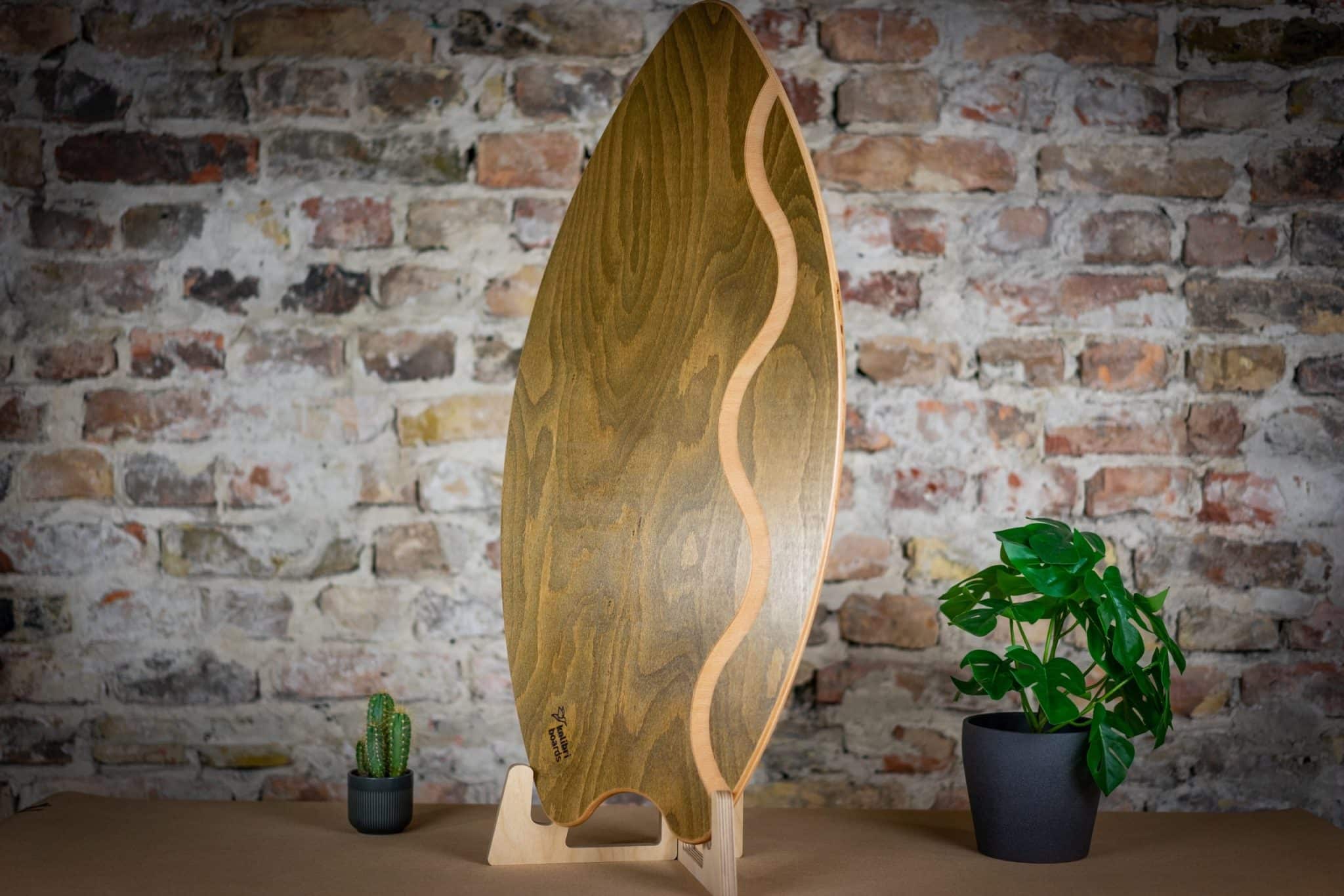
Balance on a paddle board is not strength. It is a set of small ankle and hip corrections your body makes before you consciously notice anything, and those corrections improve with practice on any unstable surface.
That is what a wobble board is for in the off season, and ten minutes a day in a kitchen does measurably more for your paddling than the same ten minutes of core work on the floor.
The boards divide into three types. Rocker boards tip along one axis and are the beginner’s choice. Round base wobble boards move in every direction and are far harder. Inflatable trainers add a soft, unpredictable surface that behaves most like water.
We compared eight balance boards, from a nineteen dollar Amazon Basics disc to a seven mode set with a roller, and sorted them by how closely each one trains what a board actually asks of you.


The best balance boards at a glance
| Board | Type | Load | Standout features |
|---|---|---|---|
| INFIDEZ 360 Rotation BoardTop pick | Cross base, 360 degrees | 250 lb | Full directional rotation, anti-slip surface, doubles as a desk board |
| ZELUS 25 in Balance TrainerMost like water | Inflatable dome | 600 lb | 8 in high, textured PVC, ABS base, two resistance bands included |
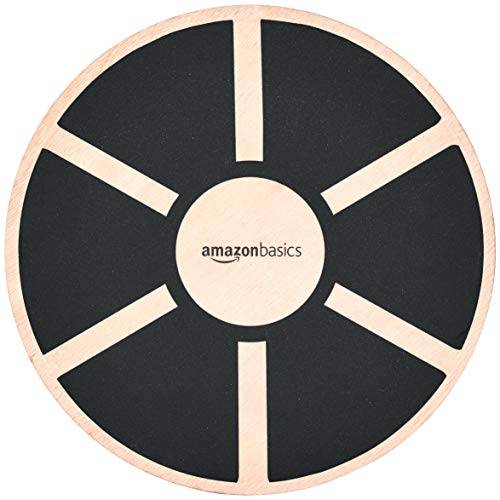
| Amazon Basics Wobble TrainerBest value | Round wobble board | 265 lb | Solid wood top, non-slip surface, works for planks and push-ups |
| Sportneer 7 Mode Balance BoardMost versatile | Board with roller and ball | 450 lb | Birch construction, seven modes, roller and ball included |
| StrongTek Advanced Cross BaseBest progression board | Cross base, 360 degrees | Home use | Larger floor contact than a round base, textured top |
| StrongTek Professional Rocker BoardBest for beginners | Rocker board | Home use | 17.5 x 13.5 x 3 in, Lauan hardwood plywood, grippy surface |
| FEZIBO Standing Desk Balance BoardBest for a desk | Desk wobble board | Office use | 360 degree swing, anti-fatigue design, superior grip |
| Gentle Monster 35 in Rocker BoardBiggest board | Large rocker board | Adults and children | 35 in long, natural wood, doubles as play equipment |
The eight boards in detail
- Typecross-shaped base, 360 degree rotation
- Loadup to 250 lb
- Surfaceanti-slip textured
- Leveladvanced
- Other usesstanding desk, rehabilitation, physiotherapy
Best for: Paddlers who already have decent balance and want a real challenge
A rocker board tips one way. Water moves in all of them at once, which is why a 360 degree board transfers far better to paddling.
The cross base is a good compromise. It rotates fully but has more floor contact than a round base, so the movement is controllable rather than chaotic.
Expect to be poor at it for a week. Ankle stability adapts quickly, and that adaptation is exactly what you want before your first paddle of the season, alongside the paddle work that everyone focuses on instead.
Strengths
- Rotates in every direction on the spot, which is what a board on water does
- Cross base gives more control than a round base while staying difficult
- Anti-slip surface that works barefoot
- Thirty three dollars
Weaknesses
- Genuinely hard at first, and not a beginner's board
- 250 pound limit is lower than the inflatable trainers
- Typeinflatable half dome
- Size25 in wide, 8 in high
- Load600 lb
- Baseflat ABS with a textured PVC dome
- Extrastwo resistance bands included
Best for: Paddlers who want the closest feel to an unstable board deck
Rigid wooden boards pivot. An inflatable dome squashes, rolls and gives way underfoot, which is much closer to what a board does in wind chop.
Turn it over and the flat base becomes an unstable platform for press-ups and planks. That doubles what one piece of equipment gives you.
It is the largest thing on this list and needs somewhere to live. If storage is tight, a wooden board slides under a sofa and this does not.
Strengths
- A soft surface that deforms underfoot, exactly like a board on chop
- The highest load rating here at 600 pounds
- Can be used dome up or dome down for two completely different exercises
- Resistance bands included for upper body work
Weaknesses
- Ninety dollars and bulky to store
- Requires a pump and occasional topping up
- Typeround wobble board
- Topsolid wood
- Load265 lb
- Surfacenon-slip
- Usesstanding balance, planks, push-ups, rehab
Best for: A first board, at the lowest price that is still worth owning
Nineteen dollars removes every excuse. It is a solid wooden wobble board, it works, and there is nothing on it to break.
Where it wins is that you will leave it out. A board in a cupboard trains nothing, and a board by the kettle gets ten minutes a day.
The load limit is worth checking if you are a larger paddler, since 265 pounds is lower than most of the other boards here.
Strengths
- Nineteen dollars for solid wood rather than moulded plastic
- Non-slip top that works with bare feet
- Small enough to leave out permanently, which is how it gets used
- Fine for planks and press-ups as well as standing
Weaknesses
- 265 pound limit is the lowest here
- Plain, with no adjustment or progression
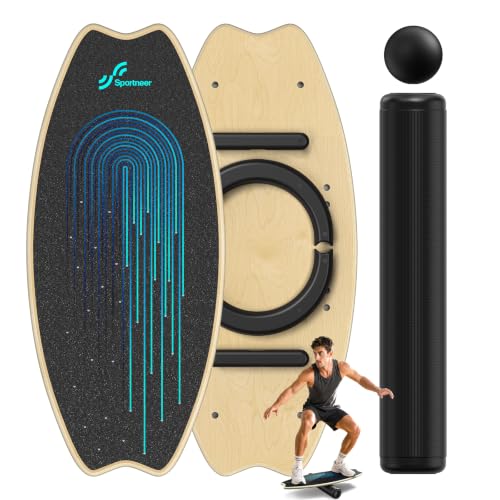
- Typeboard with a roller and a ball
- Modesseven configurations
- Materialbirch
- Load450 lb
- Setboard, roller and ball included
Best for: People who get bored, and anyone wanting a long progression
The reason most balance boards stop being used is that they get easy. A set with seven modes keeps producing a challenge for years.
The roller is the interesting part. Standing on a board over a free rolling cylinder is genuinely difficult and trains reactions faster than any static board.
Start against a wall. Everyone falls off the roller on the first attempt, and there is no reason for that to be dramatic.
Strengths
- Seven modes, so the difficulty grows with you instead of plateauing
- Roller mode is the hardest balance training here, close to a slackline
- Birch build with a 450 pound rating
- One purchase covers beginner to advanced
Weaknesses
- Ninety dollars
- The roller needs space and should be used near a wall at first

- Typecross base, 360 degree wobble
- Levelbetween a rocker board and a round base
- Surfacetextured non-slip top
- Buildsolid wooden platform
- Usehome workouts and rehabilitation
Best for: The step between a rocker board and a full round base wobble board
Progression is the thing most people get wrong with balance training. They buy a rocker board, master it in a fortnight and then plateau.
This is designed as the middle rung: full directional wobble, but with a wider contact patch so it does not throw you off immediately.
If you already stand comfortably on a rocker board, this is the sensible next purchase rather than jumping to a round base.
Strengths
- Fills the gap between easy rocker boards and hard round bases
- Larger floor contact makes the movement controllable
- Textured top keeps bare feet secure
- Thirty nine dollars
Weaknesses
- Less demanding than a true round base once you improve
- Not a beginner's first board either
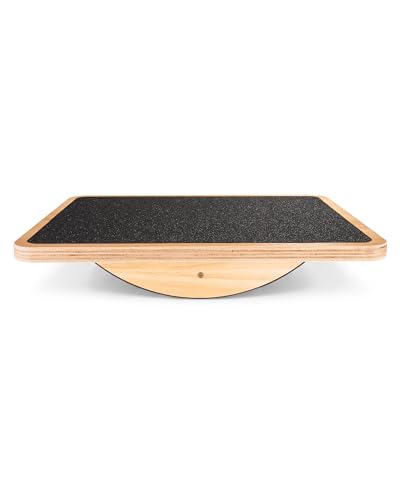
- Typerocker board, single axis
- Size17.5 x 13.5 x 3 in
- MaterialLauan hardwood plywood, plantation grown
- Surfacetextured easy-grip
- Usesbalance training and standing desk
Best for: Complete beginners, and anyone rehabilitating an ankle
A rocker board tips forwards and backwards or side to side, depending on how you stand on it. That is a mild challenge, and mild is right for a first board or a recovering ankle.
The compact size means it slides under a standing desk, and using it there is how most people accumulate the hours.
Treat it as a starting point. Once you can stand on it while reading your phone, you need a 360 degree board.
Strengths
- Single axis movement, which is much less intimidating to start with
- Compact enough to keep under a desk
- Textured surface that is gentle on bare feet
- Sustainable plantation grown hardwood plywood
Weaknesses
- You will outgrow it, probably within a month
- Single axis trains far less than a 360 degree board
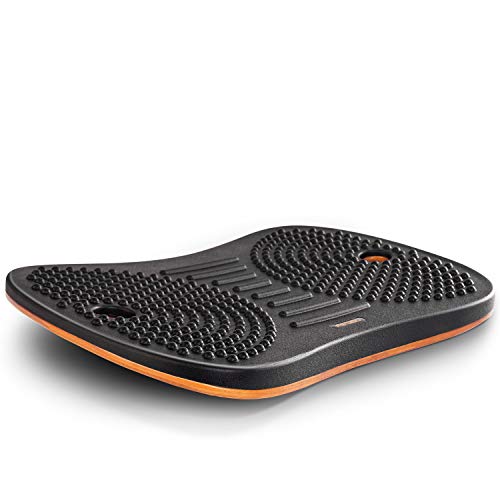
- Typedesk wobble board with an anti-fatigue mat surface
- Motion360 degree swing
- Gripsuperior grip surface, stays steady under load
- Usestanding desks, retail, anywhere you stand for hours
- Designengineered for stability with movement
Best for: Anyone with a standing desk who wants training for free
The best balance training is the training you do without noticing. Standing on this for a working day accumulates more time than any deliberate session.
It is deliberately not very hard, because you have to be able to type. Judge it as furniture that trains you slightly, not as a wobble board.
If you already have a standing desk it is a good purchase. If you do not, buy a wobble board instead and use it for ten minutes a day.
Strengths
- Turns hours of standing into low level balance training
- Anti-fatigue surface, so it is comfortable for a full day
- 360 degree motion rather than a simple rocker
- Reduces the static stiffness of a standing desk
Weaknesses
- Seventy five dollars, expensive for the challenge it offers
- Not difficult enough as a dedicated training board
Gentle Monster Wooden Wobble Balance Board, 35 inch
Biggest board- Typelarge rocker board
- Size35 in long, 11.8 in wide, 6 in high
- Materialnatural real wood with premium paint
- Userschildren and adults
- Other usesseat, bridge, yoga aid, play equipment
Best for: Households with children, where the board earns its keep all day
Every other board here asks you to stand with your feet close together. This one is long enough for a real stance, which is how you stand on a paddle board.
It is sold as Montessori play equipment, and that is not a drawback. A board children use daily is a board that lives in the room rather than a cupboard.
For a serious training stimulus it is the easiest board in this list. Buy it for the household, not for the training.
Strengths
- Long enough to stand on with both feet apart, unlike small discs
- Natural wood that looks like furniture rather than gym equipment
- Genuinely useful for children's play and vestibular development
- Doubles as a seat, a stretch aid and a yoga prop
Weaknesses
- Fifty dollars and it takes up real floor space
- Wide stance rocking is easier than a small board, so it trains less
How to choose a balance board for paddling
Match the board to your level, not your ambition: A round base wobble board is unusable for a genuine beginner and boring for an experienced one. Rocker boards for the first month, cross base 360 degree boards after that, round base and roller sets when those get easy.
360 degrees beats one axis: Water moves under you in every direction at once. A board that only tips forwards and backwards trains a fraction of what you need. If you can only buy one board and you already have basic balance, buy a rotating one.
Soft or rigid: An inflatable trainer deforms as well as tilts, which is closer to the deck of an inflatable board in chop. A wooden board pivots on a fixed point, which is more precise but less realistic. Both build the same proprioception, the sense of where your joints are that does the actual balancing.
Where it will live: The single biggest factor in whether balance training happens is whether the board is visible. Small wooden boards stay out, large inflatable domes get put away, and boards in cupboards train nobody.
Load rating and surface: Check the rating, since these run from 250 to 600 pounds. And use it barefoot on a textured surface, since balance comes from your feet and shoes remove most of the information.
Frequently asked questions
Does a wobble board actually help paddle boarding?
Yes, for the balance component. Standing on an unstable surface trains the ankle and hip corrections that keep you upright on a board, and those adapt quickly. It does not train paddle technique, reading water or the fitness for a long paddle, so treat it as one part of off season preparation.How long should I use it for?
Ten minutes a day beats an hour a week. Balance adapts with frequency rather than duration, which is why a board left out where you see it works better than one you have to fetch. Two or three short sessions a day while the kettle boils is a realistic pattern.Rocker board or round wobble board?
Rocker board if you are starting or coming back from an ankle injury, because single axis movement is much easier to control. Round base or cross base if you already have decent balance, because they move in every direction and that is what water does.Barefoot or in shoes?
Barefoot, on a textured surface. Your feet do the sensing, and a cushioned sole filters out most of the information your ankles use to correct. This is the same reason most people paddle barefoot on the deck pad.Bottom line
For paddlers with some balance already, the INFIDEZ 360 degree board at thirty three dollars is the best value here, because it moves in every direction and that is what transfers to water. If you are starting from nothing, take the StrongTek rocker board first and move up in a month.
The ZELUS inflatable trainer is the closest thing to standing on a board in chop, and it doubles as a press-up and plank platform, which justifies the ninety dollars if you will use both. Whichever you buy, leave it where you will trip over it, since the board you see is the board you stand on.


