


A beginner board has one job: to stay flat under someone who does not yet know how to stand on it. Everything else can wait.
That means width before length, and volume before looks. A 32 to 35 inch board feels like a jetty. A narrow 30 inch board feels like a tightrope on the first morning.
The good news is that the beginner segment is where the money goes furthest. Nothing here costs more than 240 dollars, and every board comes with a paddle, a pump, a leash and a bag.
We compared nine complete packages, from 120 dollars to 240 dollars.


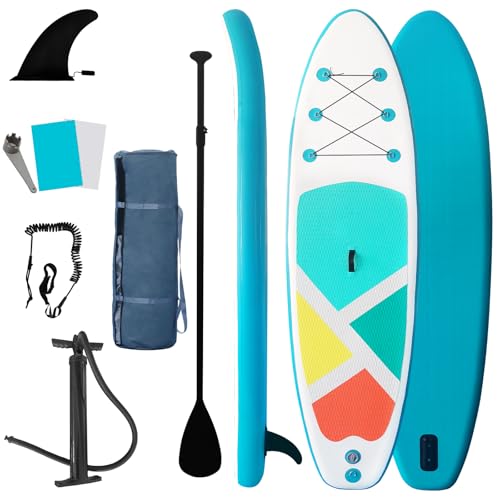
The best beginner paddle boards at a glance
| Board | Size | Capacity | Standout feature |
|---|---|---|---|
| Suncorp 11 ft x 34 inTop pick | 11 ft x 34 in x 6 in | 420 lb | Marine-grade PVC and a 6-point bungee |
| SereneLife 10 ft 6Best known brand | 10 ft 6 x 32 in x 6 in | Not stated | The standard learning shape with a full kit |
| iTAOSTAR N26ABest premium | 11 ft 6 x 35 in | 450 lb | Five removable fins and a 3 year warranty |
| MASTERISH 11 ft 6 x 35 inBest extra wide | 11 ft 6 x 35 in x 6 in | 450 lb | A 10 in US fin box rather than a moulded fin |
| Marsdorgan 11 ftEasiest to carry | 11 ft x 34 in x 6 in | 430 lb | Five handles and a woven drop-stitch core |
| Panana 10 ft x 30 inBest for smaller paddlers | 10 ft x 30 in x 6 in | 350 lb | Diamond-groove EVA deck and three fins |
| ABBOARD 10 ft 6Lightest | 10 ft 6 x 32 in x 6 in | 330 lb | 35 percent lighter construction, valve wrench included |
| GENREEN 11 ft x 32 inMost capacity per dollar | 11 ft x 32 in x 6 in | 450 lb | Dual PVC layers of 0.52 mm and 0.7 mm |
| QILEBA 10 ft 4 SUPBest value | 10 ft 4 x 31 in x 6 in | 330 lb | Heat-welded PVC and a pump with a gauge |
The nine beginner boards in detail
- Size11 ft x 34 in x 6 in
- Capacity420 lb
- Materialmarine-grade PVC with drop stitch
- D-rings10, with a 6-point front bungee
- Handles2 reinforced, centre and rear
- Kitpaddle, hand pump, leash and backpack
- Pricearound 153 dollars
Best for: A first board for an adult who wants to stand up on day one
Almost everyone who gives up on paddle boarding does so in the first hour, on a board too narrow for their level.
Width is the cure and it is cheap. This is a foot wider than a performance board and the difference on a first attempt is total.
You will outgrow the width eventually, which is a good problem. By then you will know whether you want speed, waves or touring, and can buy a proper second board knowing why.
Strengths
- Thirty four inches is wide enough that balance stops being the problem
- 420 lb of capacity covers a big adult plus a child or a dog
- Marine-grade PVC and salt resistance, which matters more than beginners expect
- A rear handle as well as a centre one, so two people can carry it
Weaknesses
- Thirty four inches is slow once you can actually paddle
- A hand pump only, and eleven feet of board takes a while to fill
- Size10 ft 6 x 32 in x 6 in
- Decknon-slip EVA pad
- Fins3, with a removable centre fin
- Pumpdouble-action hand pump
- Paddle3-piece aluminium
- Kitleash, repair kit and carry backpack
- Pricearound 180 dollars
Best for: Someone who wants the safe, boring, well-supported choice
Thirty two inches is the compromise width. Stable enough to learn on, narrow enough to still be enjoyable once you can paddle properly.
If you are under about eighty kilos and reasonably steady on your feet, start here rather than on a 35 inch platform you will want to replace next season.
The double-action pump is worth noticing. Inflating on both strokes is roughly half the effort, and that decides how often a board leaves the boot.
Strengths
- 10 ft 6 by 32 in is the shape most paddlers eventually settle on
- A double-action pump, which halves the work of inflating
- SereneLife have been in this market long enough to answer a warranty claim
- A repair kit in the box, unlike several boards here
Weaknesses
- Thirty two inches is narrower than the top pick and feels it on day one
- An aluminium paddle that flexes

- Size11 ft 6 x 35 in
- Capacity450 lb
- Fins5 removable, 3 centre and 2 side
- Warranty3 years on the board, 1 year on accessories
- Pumpdual-action
- Kitpaddle, shoulder strap, leash, waterproof phone pouch
- Pricearound 240 dollars
Best for: A family board that a beginner will not outgrow next summer
The reason to spend the extra is that this board grows with you. Fin choice changes how a board behaves more than anything else you can do to it.
Start with all five fins in for maximum stability, then pull the side fins once you stop thinking about your feet.
The kayak seat mounting points matter for a family board too. Children last far longer sitting down than standing up.
Strengths
- Five fins mean the board can be set up loose or tracking as you improve
- 450 lb takes two adults, so it doubles as a family board
- A three year warranty on the board itself, not just the accessories
- D-rings positioned for a kayak seat later
Weaknesses
- Two hundred and forty dollars is the most here
- Thirty five inches is a lot of board to paddle into a headwind

- Size11 ft 6 x 35 in x 6 in
- Capacity450 lb
- Fin10 in US fin
- Handles3 reinforced, front, centre and rear
- Storage6-point front and 4-point rear bungee
- Bag1680D backpack
- Pricearound 170 dollars
Best for: Nervous beginners, larger paddlers, and anyone taking a passenger
A US fin box on a budget board is unusual and genuinely useful, because the moulded plastic fins on cheap boards are the first thing worth replacing.
Everything else here is about confidence. Nearly three feet of width under your feet removes the wobble entirely.
Accept that it will be slow. On flat water with no wind that is irrelevant, and flat water with no wind is where you should be learning. Wear a leash even there.
Strengths
- A US fin box, so a better fin can replace the supplied one
- 450 lb capacity for 170 dollars is the best ratio here
- Three handles, so lifting it inflated is a two person job done properly
- A 1680D bag rather than the thin nylon most packages include
Weaknesses
- Thirty five inches of width catches crosswind like a sail
- Long and wide means slow, whatever the fin

- Size11 ft x 34 in x 6 in
- Capacity430 lb
- Corewoven drop stitch with military-grade PVC
- Handles5
- D-rings11
- Kitpaddle, pump, backpack, leash, phone pouch, repair kit and 3 fins
- Pricearound 148 dollars
Best for: Anyone who has to move the board around alone, inflated
Handles decide whether an inflated board can be moved by one person, and most boards give you exactly one in the middle.
With handles front, back and centre you can drag, lift or shuffle it up a bank without deflating anything.
The woven core is the technical detail worth knowing. Woven drop stitch holds pressure more evenly than knitted, which is why the board feels firmer at the same psi.
Strengths
- Five handles is more than any other board here and it changes how it carries
- A woven drop stitch core, which is stiffer than a plain knitted one
- Eleven D-rings for a seat, a fishing rig or a dog bag
- A complete kit including a repair kit for under 150 dollars
Weaknesses
- Wood grain printing wears at the rail over the seasons
- Thirty four inches is wide for a solo paddler

- Size10 ft x 30 in x 6 in
- Capacity350 lb
- Corehigh-density drop stitch with dual-layer PVC
- Deckdiamond-groove EVA
- Fins2 fixed and 1 removable centre
- Pumpdual-action with a gauge
- Pricearound 130 dollars
Best for: Lighter adults and teenagers who find a wide board unwieldy
A board that is too big is as awkward as one that is too small. A fifty kilo paddler on a 35 inch board is pushing a barge.
Ten feet by thirty inches carries a lighter adult easily and is much less work in wind, which is where most first sessions go wrong.
The gauge on the pump is the detail to look for at this price. Without one you have no idea whether the softness is the board or you.
Strengths
- Ten feet by thirty inches suits a lighter paddler far better than a 35 in platform
- A pump with a gauge, so you actually reach working pressure
- The diamond-groove deck grips better than a smooth pad
- Small enough to handle alone at every stage
Weaknesses
- Thirty inches is the narrowest here and demands a little balance
- 350 lb capacity rules out passengers
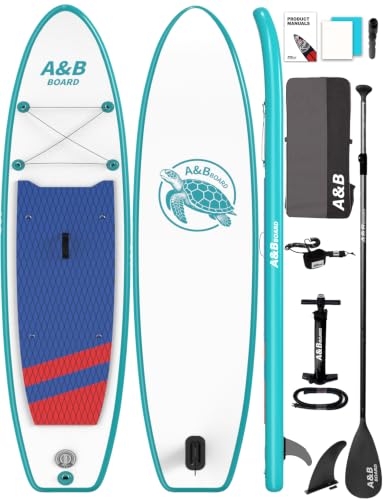
- Size10 ft 6 x 32 in x 6 in
- Capacity330 lb
- Constructionultralight PVC, 35 percent lighter than comparable boards
- Decknon-slip EVA
- Kitpaddle, leash, removable centre fin, pump and valve wrench
- Bagsturdy backpack
- Pricearound 130 dollars
Best for: Paddlers who will carry the board to the water rather than park beside it
Boards do not go unused because people stop enjoying the sport. They go unused because carrying twenty five kilos to the water is a chore.
Cutting a third of the weight out changes the calculation on a marginal evening, which is when most paddling actually happens.
Keep the valve wrench in the bag. A loose valve core is the most common slow leak and the fix takes seconds.
Strengths
- A genuinely light board, which is the single thing that decides how often it is used
- A valve wrench in the box, which most brands leave out
- 10 ft 6 by 32 in is the standard beginner shape
- Under 130 dollars with the full kit
Weaknesses
- Light construction means less material and a slightly softer ride
- 330 lb is the lowest capacity here alongside the QILEBA

- Size11 ft x 32 in x 6 in
- Capacity450 lb
- Constructiondual PVC layers, 0.52 mm inner and 0.7 mm outer
- Deck5 mm EVA
- Weight24 lb
- Extracamera bracket
- Pricearound 144 dollars
Best for: A larger paddler who does not want a 35 inch barge
Capacity normally comes from width, which costs you speed. Here it comes from length and thickness instead, which does not.
For a heavier paddler that is the better trade: an eleven foot board at 32 inches paddles far more pleasantly than a shorter, wider one at the same capacity.
The published layer thicknesses are a small sign of an honest listing. Vague material claims usually mean single-layer PVC.
Strengths
- 450 lb capacity on a 32 in board, which is unusual
- Published material thicknesses, which most budget brands hide
- Eleven feet tracks noticeably better than a 10 ft board
- A camera bracket included rather than sold separately
Weaknesses
- Twenty four pounds is on the heavy side
- A basic single-action pump
- Size10 ft 4 x 31 in x 6 in
- Capacity330 lb
- Weight23 lb
- Constructionheat-welded PVC over 2-layer drop stitch
- Pumpmanual pump with a PSI gauge
- Kitboard, backpack, pump, paddle and leash
- Pricearound 120 dollars
Best for: Trying the sport for the price of a few hire sessions
Heat-welded seams are what premium brands charge four figures for, and finding them on a 120 dollar board is the surprise of this list.
Take that with some caution. Welding quality varies and a cheap weld is not a Blackfin weld, but it is still better than a glued lap seam.
At this money the sensible plan is to buy it, paddle a season, and decide what you actually want next. Add a buoyancy aid to the order.
Strengths
- Heat-welded seams at 120 dollars, which is remarkable at this price
- Twenty three pounds, among the lightest here
- A gauge on the pump, which many boards twice the price omit
- A wide enough deck for yoga as well as paddling
Weaknesses
- 330 lb capacity, so no passengers
- A budget paddle and no repair kit
How to choose a beginner paddle board
Buy width, not length: Stability comes from the width under your feet. Thirty two inches suits most adults, thirty four and up suits nervous or heavier paddlers, and anything under thirty one inches is a board to grow into rather than start on.
Add your gear to your weight before reading the capacity: A board at its stated limit floats low, takes water over the nose and feels twitchy. Leave at least fifty kilos of headroom over your own weight and the numbers stop causing disappointment.
The pump matters more than the paddle: A board at 10 psi feels like a lilo and a board at 15 psi feels like a plank. A dual-action pump with a gauge is what gets you to the second one, and it is the part of the package most worth checking before buying.
Start on flat water with no wind: Offshore wind is the real danger in this sport, not depth or waves. It pushes a light board out faster than a beginner can paddle back, which is why the first sessions belong on a small lake or a sheltered bay.
Buy the safety kit with the board: A leash keeps the board with you after a fall, and the board is your flotation. Wear a personal flotation device as well, in some places it is a legal requirement rather than advice.
Frequently asked questions
How wide should a beginner board be?
Thirty two inches is the sensible default for an adult of average build. Go to thirty four or thirty five inches if you are heavier, particularly nervous, or expect to carry a child or a dog. Drop to thirty inches only if you are light and reasonably confident on your feet.Is a cheap paddle board good enough to learn on?
Yes. At beginner speeds you will not feel the stiffness difference that separates a 150 dollar board from a 900 dollar one. What you will feel is a board that is too narrow, so spend the money on the right size rather than on construction.How long does it take to learn?
Most people kneel for the first ten minutes, stand within half an hour and paddle comfortably by the end of the first session. Falling in is normal and is why you learn in warm shallow water rather than in a cold estuary.What else do I need on day one?
A leash, a buoyancy aid, water, and a dry bag or waterproof pouch for a phone. Everything else, from a better paddle to a seat, can wait until you know how you like to paddle.Bottom line
The Suncorp is the pick because it puts thirty four inches of width and 420 lb of capacity under a beginner for 153 dollars, and width is the one specification that decides whether a first session ends in laughter or in giving up.
If you are lighter or already fairly steady, the SereneLife 10 ft 6 is the shape you will keep using. And at 120 dollars the QILEBA costs about four hire sessions, which makes trying the sport an easy decision.


