

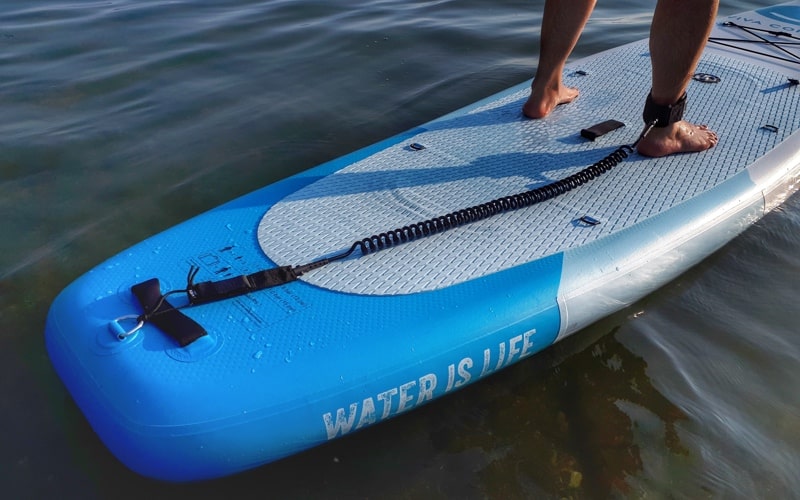
The leash is the cheapest piece of safety equipment you own and the one most often bought badly.
A board that gets away from you in wind travels faster than you can swim. That is the whole argument, and it is why a leash matters more on flat water than most people assume.
Two decisions cover almost everything: coiled or straight, and how thick the cord is. Coiled stays out of the water and off your feet, straight is what you want in surf, and thickness is a trade between drag and strength.
We compared ten leashes for paddle boarding, from a six dollar spare to Dakine’s urethane Dura-Cord, and sorted them by the water they are built for.


The best SUP leashes at a glance
| Leash | Type | Cord | Standout features |
|---|---|---|---|
| Santa Barbara Surfing Coiled LeashTop pick | Coiled, 10 ft | 7 mm urethane | Dual 316 stainless swivels, triple rail saver, key pocket in the cuff |
| Abahub Coiled SUP LeashBest value | Coiled, 10 ft | 7 mm TPU | Double anti-corrosive swivels, 2.4 in neoprene cuff, quick release tab |
| Dakine SUP Coiled Ankle LeashPremium | Straight-coil-straight, 10 ft | 3/16 in urethane Dura-Cord | Moulded neoprene cuff, Posi-Lock closure, Opti-Flex ends |
| BPS Storm Premium Coiled LeashBest cuff | Coiled, 10 ft | Heavy duty urethane | Triple rail savers, double swivels, key pocket, quick release tab |
| BPS Storm Ultralite Coiled LeashLightest | Coiled, 10 ft | 5.5 mm coiled | Double stainless swivels, padded neoprene cuff, flatwater focus |
| WOOWAVE 11ft Coiled SUP LeashLongest reach | Coiled, stretches to 11 ft | 5.5 mm urethane | Comes with an IPX8 waterproof pouch and belt |
| AQUARM 11ft Coiled LeashCheap and long | Coiled, stretches to 11 ft | 5 mm urethane | Double stainless swivels, 2.5 in padded cuff |
| niphean 3-10ft Coiled LeashWidest cuff | Coiled, stretches to 10 ft | TPU coiled | Widened SBR foam cuff, dual 360 degree swivels, 12 month promise |
| Abahub 6ft Straight LeashFor surf | Straight, 6 to 10 ft | 6 mm TPU | Five lengths, eight colours, triple wrap rail saver |
| HEYTUR Coiled SUP LeashCheapest spare | Coiled, 10 ft | 5 mm urethane | 1.5 in quilted neoprene cuff, very light |
The ten leashes in detail
- Typecoiled, 10 ft
- Cord7 mm urethane
- Swivelstwo, 316 stainless steel
- Rail savermoulded triple wrap
- Cuffpadded neoprene with easy pull tab and hidden key pocket
Best for: Flat water, touring and racing, on any board up to 14 feet
Everything on a leash that can fail is on this one in its better version. The cord is thick, the swivels are the right grade of stainless, and the rail saver is wide enough to spread the shock across the tail rather than into the plug.
The coil keeps the cord on the deck instead of trailing in the water. On a long paddle that is less drag and, more importantly, nothing wrapping around your ankles when you step back to turn.
The key pocket in the cuff is the detail you end up using every session. Car key in, tab pulled tight, and nothing else to carry. If you need more than that, look at the waterproof fanny packs.
Strengths
- A 7 mm cord handles a big board in wind, where thin cords stretch and snap
- 316 stainless swivels are the grade that survives salt water
- Triple rail saver spreads the load, so the leash plug does not tear out
- Key pocket in the cuff, which removes the need for a second pouch
Weaknesses
- More expensive than the near identical Abahub
- Overkill for a small board on a calm lake
- Typecoiled, 10 ft
- Cord7 mm TPU
- Swivelsdouble, anti-corrosive steel
- Cuff2.4 in neoprene, double wrap hook and loop
- Rail savernylon triple wrap
- Colourseight
Best for: Almost everyone, on almost every board
This is the leash to buy if you do not want to think about leashes. It has the thick cord, the double swivels, the wide cuff and the rail saver, and it costs about the same as lunch.
Abahub have been making this exact leash for years, which is worth something in a category full of one season brands. Spares and colours stay available.
Ten feet suits boards from about 10 to 12 feet. The rule is a leash equal to or slightly longer than the board, so a 14 foot tourer wants something longer.
Strengths
- The same 7 mm cord and double swivel layout as leashes costing more
- Wide neoprene cuff that does not chafe on a long paddle
- Quick release pull tab, so you can get off the board fast
- Eight colours, which sounds trivial until you share a rack with four boards
Weaknesses
- TPU rather than urethane, slightly less resistant to long UV exposure
- Only one length, so surfers need the straight version
- Typestraight, coil, straight, 10 ft
- Cord3/16 in urethane Dura-Cord
- Cuffmoulded neoprene
- ClosurePosi-Lock hook and loop
- Endsmoulded Opti-Flex
Best for: Paddlers who have already broken a cheap leash and do not want to repeat it
The straight, coil, straight layout is the thing to understand. Instead of coiling right up to the cuff, this leash runs straight for the first stretch, coils in the middle, then goes straight again at the board. The coil stays on the deck, away from your ankles and out of the water.
Urethane rather than TPU is the other difference. It resists UV and salt for longer and it keeps its stretch instead of going slack after a season.
Forty dollars for a leash is a lot until you have had a cord let go in wind with an offshore breeze behind the board. Then it looks cheap.
Strengths
- Straight sections at both ends, so the coil sits on the deck and nowhere near your feet
- Urethane Dura-Cord is the most durable material used in any leash here
- Moulded ends rather than glued, which is where cheap leashes fail first
- Dakine build quality, which is the reference point in this category
Weaknesses
- Around double the price of the Abahub
- No key pocket, unlike most rivals at half the price
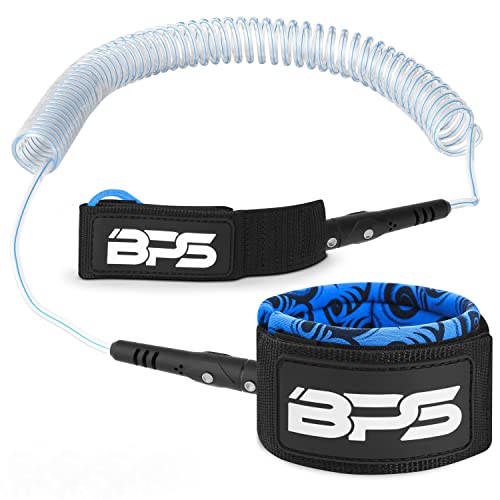
- Typecoiled, 10 ft
- Cordheavy duty urethane, stretches up to five times its length
- Swivelsdouble
- Rail saverstriple
- Cuffpadded neoprene with key pocket and quick release tab
Best for: Long sessions where the cuff is what you notice
BPS build leashes around the cuff, and it shows. Thick padded neoprene, a proper pull tab, and a key pocket that closes properly rather than gaping.
The coil is tighter than most, which keeps the cord out of the way in chop and stops it dragging when you paddle hard.
The guarantee is the quiet selling point. Leashes fail at the swivel or the rail saver and BPS replace them, which is not standard in this price band.
Strengths
- One of the most comfortable padded cuffs in this comparison
- Triple rail savers, so shock spreads instead of concentrating
- Tight coiling means no kinking and nothing snagging on submerged obstacles
- Replacement guarantee if the leash fails
Weaknesses
- Priced above the Abahub without a clear performance advantage
- Bright colourways are not to everyone's taste

- Typecoiled, 10 ft
- Cord5.5 mm coiled
- Swivelsdouble stainless steel
- Cuffpadded neoprene with quick release tab
- Useflat water
Best for: Flat water paddlers who dislike feeling a leash at all
Some people hate the feel of a leash on the ankle. This one is the answer: a thin coiled cord and a soft cuff, and after a few minutes you forget it is there.
The trade is honest. Thinner cord means less pull strength, so this is for lakes, canals and calm bays rather than a 14 foot board in a headwind.
If your board is under 11 feet and you paddle flat water, this and the Abahub are the two to choose between, and the choice is comfort against strength.
Strengths
- Light enough that you stop noticing it after five minutes
- Double stainless swivels despite the low weight
- Same comfortable BPS cuff as the Premium
- Fine choice for smaller and lighter boards
Weaknesses
- 5.5 mm is not enough cord for a big board in strong wind
- Flat water only, do not take this into surf
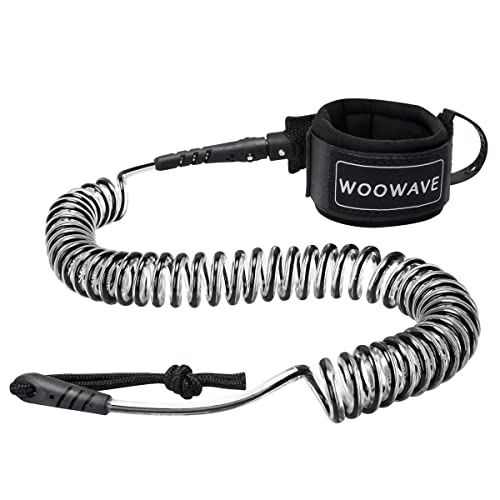
- Typecoiled, stretches to 11 ft
- Cord5.5 mm urethane
- Swivelsmoulded double stainless steel
- Cuff2.5 in high density neoprene
- ExtrasIPX8 waterproof pouch with belt included
Best for: Longer boards, and anyone who has not yet solved the phone problem
Under ten dollars, with a waterproof pouch in the box. As a first leash for someone who has just bought a board, that is hard to argue with.
The extra length is genuinely useful on a longer touring board, where a ten foot leash pulls the tail before the board has finished swinging.
Treat the pouch as a starting point rather than a solution. It works, but a dedicated case is better, and our waterproof phone bag comparison explains what separates them.
Strengths
- Stretches to eleven feet, which suits touring boards over twelve feet
- Comes with a proper sealable waterproof pouch and belt
- Moulded swivels rather than glued, unusual at ten dollars
- Wide neoprene cuff for long sessions
Weaknesses
- 5.5 mm cord on an eleven foot leash is on the thin side
- The included pouch is basic, adequate rather than good

- Typecoiled, stretches to 11 ft
- Cord5 mm urethane
- Swivelsdouble stainless steel, 360 degrees
- Cuff2.5 in high density padded neoprene
- Closurehook and loop rated for 10,000 cycles
Best for: A second leash for the family board, or a spare in the car
Cheap leashes usually save money on the swivels, and that is exactly where a leash fails. This one keeps proper stainless swivels and takes the saving in cord thickness instead, which is the better compromise.
Eleven feet of stretch handles a long board, and the cuff is as wide as leashes twice the price.
Buy it as a second leash rather than the only one. On a big board in wind, 5 mm is asking a lot of a cord.
Strengths
- Eleven feet of reach for around eleven dollars
- Stainless swivels that turn freely and resist corrosion
- Wide padded cuff, more comfortable than the price suggests
- Designed and tested in California, with sensible after sales support
Weaknesses
- 5 mm cord, the thinnest here apart from the HEYTUR
- Flat water only, and not for the biggest boards

- Typecoiled, stretches from 3 to 10 ft
- CordTPU coiled, saltwater resistant
- Swivelstwo stainless steel, full 360 degrees
- Cuffwidened, lined with SBR foam
- Support12 month promise, leash plug string included
Best for: Anyone who gets a sore ankle from a narrow cuff
Cuff width is underrated. A narrow cuff concentrates pressure on the ankle bone, and after two hours you feel it. This one is wide and foam lined and stays comfortable.
The coil recovers quickly, which is what stops slack cord gathering around your feet when you walk back on the deck.
The leash string is included, which sounds trivial until you are at the water with a leash you cannot attach.
Strengths
- The widest cuff here, which spreads pressure over a long paddle
- Coil recovers quickly, so slack does not gather around your feet
- Dual 360 degree swivels keep the cord from winding up
- Comes with the leash string, so nothing else to buy
Weaknesses
- A newer brand with a shorter track record
- Fully stretched at ten feet, so not for the longest boards
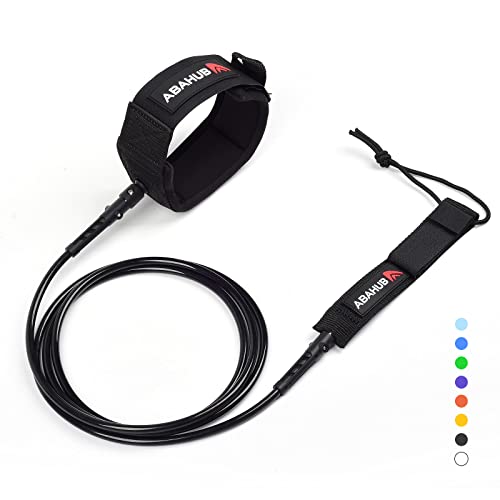
- Typestraight, available 6, 7, 8, 9 and 10 ft
- Cord6 mm TPU
- Swivelsdouble, anti-corrosive
- Cuff2.4 in neoprene, double wrap
- Rail savernylon triple wrap
Best for: SUP surfing, and any water where a coil would snap the board back at you
Coiled leashes and surf do not mix. A wave pushes the board away, the coil stretches, and then it fires the board straight back at you. In waves you want a straight leash the length of the board.
This is the same leash as the Abahub coiled one in every respect that matters, minus the coil, and available in five lengths.
Most paddlers who do both end up owning two leashes. At thirteen dollars, that is a reasonable way to live. There is a good general overview of the discipline's different modes on the standup paddleboarding entry at Wikipedia.
Strengths
- Straight cord is the correct choice in breaking waves
- Five lengths, so you can match the leash to the board
- Same cuff, swivels and rail saver as Abahub's coiled leash
- Cheap enough to own alongside a coiled leash
Weaknesses
- Trails in the water on flat paddles, which adds drag and catches weed
- Six feet is only right for a short surf style board
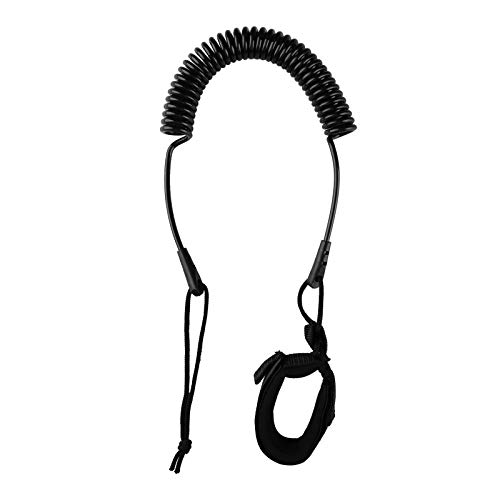
- Typecoiled, 10 ft
- Cord5 mm urethane
- Cuff1.5 in quilted neoprene
- Designclassic telephone cord coil
- Usepaddling, surfing and kayaking on flat water
Best for: A spare leash that lives in the board bag permanently
Six dollars for a working leash. It is not the leash to depend on with a big board in wind, but it is exactly the right thing to leave in the bag for the day you forget the good one.
The cuff is where the money was saved. At an inch and a half it presses rather than spreads, and you notice it on a long paddle.
Check the velcro after every few sessions. Cheap hook and loop clogs with sand, and a cuff that does not hold is not a leash.
Strengths
- Around six dollars, cheap enough to buy two
- Real urethane cord rather than moulded plastic
- Very light and packs down small
- Perfectly adequate on a small board in calm water
Weaknesses
- A 1.5 inch cuff is narrow and gets uncomfortable after an hour
- No key pocket, thin cord, basic hardware
How to choose a SUP leash
Coiled or straight: Coiled on flat water, straight in surf. A coil keeps the cord on the deck, out of the water and away from your feet. In breaking waves that same elasticity slingshots the board back toward you, which is the single most common way paddlers get hit by their own board.
Length: Match the leash to the board or go slightly longer. A 10 foot leash for a 10'6 board, an 11 foot leash for a 12'6 tourer. Too short and the board yanks before it has finished moving, too long and there is slack in the water.
Cord thickness: Five to 5.5 mm is light and fine for small boards on calm water. Seven millimetres is what you want for a big board, a heavy paddler, or wind. Thicker cord is stronger and adds drag, and on a paddle board the drag hardly matters.
Swivels and rail saver: Two stainless swivels stop the cord winding into a twisted mess, and a wide rail saver spreads load across the tail rather than tearing at the leash plug. Both are cheap to include, and a leash without them is a false economy.
Never a coiled ankle leash in moving water: On rivers and in any current, a leash that cannot be released instantly is a drowning hazard. Moving water calls for a quick release waist belt designed for the purpose, not an ankle cuff.
Frequently asked questions
Ankle or calf?
Ankle for flat water touring and racing, since it is out of the way and easy to reach. Calf placement is popular with SUP surfers because it keeps the cuff clear of the rail when you step back, and it snags less on the tail.Can I use a surfboard leash on a paddle board?
Yes, if the length and thickness match your board. A 6 foot surf leash on a 12 foot touring board is too short, and a thin competition surf cord is not built for the pull of a big board in wind. Match the leash to the board, not to the sport on the label.Is a leash needed on a lake?
Yes, and arguably more than in surf. Wind blows a light board away faster than most people can swim, and the board is your flotation. A leash keeps you and it together, which is the reason it exists.When should I replace a leash?
When the cord stays kinked instead of recovering, when a swivel turns roughly or shows rust, or when the rail saver stitching frays. Urethane also degrades in UV, so a leash left in the sun for three seasons should be retired even if it looks fine.Bottom line
For most paddlers the Santa Barbara Surfing coiled leash is the right buy: thick cord, proper stainless swivels, a wide rail saver and a key pocket you will use every session. The Abahub does nearly all of that for less, and it is the sensible default if you would rather spend the difference elsewhere.
Above them sits the Dakine, which is what you buy once you have broken a cheap leash and decided never again. Below them, the HEYTUR is a fine spare. And if you ever paddle in waves, add a straight leash to the bag, because a coiled one in surf is the mistake that ends with the board hitting you. Keep the rest of the safety kit in order too, starting with a life vest that you will actually wear.


