

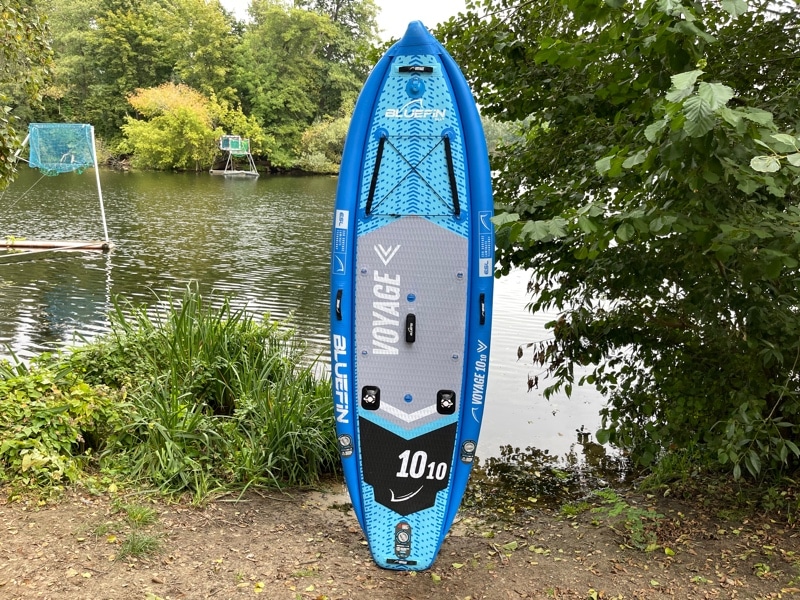
Surfing a paddle board asks the opposite of touring. You want the board short, rockered and quick to turn, not long and fast in a straight line.
That means anything over about eleven feet is the wrong tool. Wave boards live between eight and a half and ten and a half feet, with plenty of nose rocker so they do not bury on the drop.
There are three families here. Dedicated river and wave inflatables, foam soft tops that forgive collisions, and short all-round inflatables that surf small waves well enough.
We compared nine, from a 119 dollar entry board to a 1,399 dollar whitewater machine.


The best wave and surf paddle boards at a glance
| Board | Size | Type | Standout feature |
|---|---|---|---|
| Hala Atcha 86Top pick | 8 ft 6 x 36 in | Inflatable river surf | Stompbox 2.5 retractable centre fin |
| Hala Straight UpBest premium | Mid-sized all-around | Inflatable | Welded seams and a double-layer side wall |
| WAVESTORM 9ft6 SUPBest soft top | 9 ft 6 | Foam soft top | EPS core with 3 stringers and a water barrier skin |
| WAVESTORM 10ft6 SUPBest for heavier riders | 10 ft 6 | Foam soft top | Textured deck traction and storage straps |
| Boardworks SHUBU RiptideBest inflatable value | Recreational iSUP | Inflatable | Military drop stitch with an FCS II fin |
| Aqua Marina Vapor 10 ft 4Most manoeuvrable | 10 ft 4 | Inflatable | Sand-ripple EVA deck and a bungee system |
| Aqua Marina FusionBest all-round | 10 ft 10, 330 cm | Inflatable | Double wall drop stitch with a full kit |
| Niphean 10 ftLightest | 10 ft x 33 in | Inflatable | 17.8 lb with 9 D-rings |
| GYMAX 9.8 ftBest value | 9.8 ft x 6 in | Inflatable | Three fins, one removable, for 119 dollars |
The nine boards in detail
- Size8 ft 6 x 36 in x 6 in
- FinStompbox 2.5 retractable centre fin
- Rockerspecialised river rocker
- Useriver surfing and rapids
- Characteragile and playful
- BuildHala whitewater construction
- Pricearound 1,399 dollars
Best for: River waves, rapids and anyone serious about surfing a SUP
A fixed fin on a river board catches on rock and stops the board dead, usually while you are standing on it.
The Stompbox retracts on impact and springs back, which is the difference between a board built for rivers and a board taken to one.
The rocker is the other half. A river hull lifts at both ends so it climbs over foam piles instead of submarining. Wear a quick-release waist leash for any river session.
Strengths
- The retractable fin is the single most important feature on a river board
- Eight and a half feet turns inside anything else here
- A purpose-built river rocker, not an all-round hull with marketing
- Hala is the reference brand for whitewater inflatables
Weaknesses
- Fourteen hundred dollars
- Thirty six inches of width makes it slow on flat water

- Typemid-sized all-around inflatable
- Side walldouble layered for durability
- Seamswelded
- Finstrong 9 in centre fin in an Air7 US standard fin box
- Paddle3-piece B-line included
- Kitdouble-action hand pump, rolling bag and repair kit
- Uselakes and rivers
Best for: One board for lakes, gentle rivers and small waves
The US standard fin box is worth more than it looks. It means you can put a real surf fin in the board rather than living with the plastic one it came with.
Welded seams are the reason Hala boards last. Glued seams creep in heat and that is where old inflatables leak.
Buy this if you want one board and the waves are occasional. Buy the Atcha if the waves are the point.
Strengths
- Welded seams, which is the construction that outlasts glued boards
- A US standard fin box, so you can fit any surf fin you like
- Hala quality at 400 dollars less than the Atcha
- Comes with a rolling bag rather than a thin backpack
Weaknesses
- A thousand dollars
- An all-around hull, so it surfs but does not carve like the Atcha
- Length9 ft 6
- CoreEPS foam with 3 stringers
- DeckWBS water barrier skin top deck
- Typehard foam soft top, no inflation
- UseSUP and kayak hybrid
- Ridersadults and children
- Pricearound 565 dollars
Best for: Beach breaks and learners who will hit themselves with the board
Everyone falls off in waves, and in a crowded lineup the board hits people. Foam is the reason surf schools use nothing else.
Nine feet six is the right learning length. Short enough to turn on a wave, long enough to catch it in the first place.
Rinse it and store it out of the sun. Heat and UV are what delaminate a soft top, not the surf.
Strengths
- Foam construction means a board strike bruises rather than cuts
- Three stringers, so it does not fold under a heavy rider
- No pump, no inflation, just carry it down and paddle
- A shape that genuinely works in small surf
Weaknesses
- A rigid board, so transport needs a roof rack
- Foam boards absorb water once the skin is damaged

- Length10 ft 6
- CoreEPS foam with 3 stringers
- DeckWBS water barrier skin with textured traction
- Extrasstorage accessory straps
- Typefoam soft top
- UseSUP and kayak hybrid
- Ridersadults and children
Best for: Larger paddlers who want a foam board that still floats them
Volume is what decides whether a board floats you well enough to paddle into a wave, and it scales with length more than anything else.
If you are over about ninety kilos, the shorter Wavestorm will feel like it is sinking under you as you paddle.
The textured deck is a real advantage over waxing a hard board every session, especially in warm water.
Strengths
- A foot of extra length adds real volume for heavier riders
- Textured deck traction, so no wax is needed
- Storage straps for a dry bag or a jacket
- The same forgiving foam construction as the 9ft6
Weaknesses
- Seven hundred dollars
- 10 ft 6 is slower to turn on a steep wave
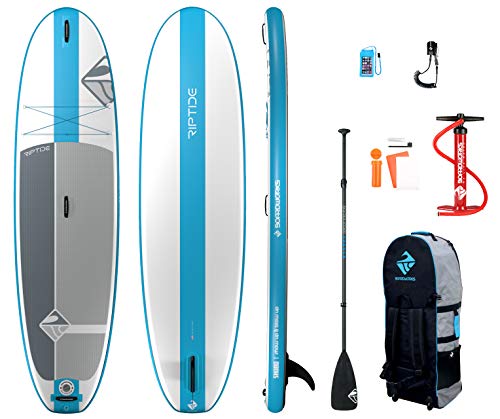
- Typerecreational inflatable SUP
- Coremilitary drop stitch
- Deckhoneycomb embossed pad
- FinFCS II quick connect
- Paddle3-piece adjustable fiberglass
- Kitcarry backpack, high pressure pump with gauge
- Cargo2 point die downs with bungee cordage
Best for: A first board that will handle small waves as well as flat water
The FCS II fin box is the detail that lifts this above the other budget inflatables, because every surf fin made fits it.
A fiberglass paddle at two hundred dollars is unusual too, and the paddle is what most cheap packages compromise.
Treat it as a small-wave board. In anything overhead you want the shorter dedicated shapes higher up this list. Our paddle guide covers when to upgrade further.
Strengths
- An FCS II fin box, the surf industry standard, on a 200 dollar board
- A fiberglass paddle rather than aluminium in the package
- Boardworks is a real surf brand with real shaping input
- A honeycomb deck pad that grips wet feet properly
Weaknesses
- Sold as a recreational board, so it is not a dedicated wave shape
- Bungee cargo is of little use in surf

- Length10 ft 4
- SeriesAll-Around
- Deckmachine pressed EVA with sand-ripple grooving
- Coredouble wall fabric drop stitch
- CargoRED STRAP bungee system
- KitSports III paddle, leash and pump
- PackagingCircupack
Best for: Small beach break and messing about on the shore break
Length is the first thing to cut when you want a board that turns, and this is one of the shorter all-around boards from a brand that has been making them for years.
The deck pattern is not a gimmick. Fine grooving holds a wet foot much better than a smooth pad when you are moving back to turn.
Expect to step back over the tail to pivot. That is the technique this board rewards.
Strengths
- Ten four is short enough to turn without being unstable
- The sand-ripple deck grips better than a flat EVA pad
- A complete kit at 250 dollars from an established brand
- Light enough to carry down a beach path
Weaknesses
- A single fin setup limits how hard you can drive a turn
- An all-around hull, so it noses in on a steep drop

- Length10 ft 10, 330 cm
- SeriesAll-Around
- Deckmachine pressed EVA with sand-ripple grooving
- Coredouble wall fabric drop stitch
- CargoRED STRAP bungee system
- KitSports III paddle, leash and pump
- Colourorange
Best for: Someone whose paddling is mostly flat with occasional waves
This is the compromise board. It will not carve like the Hala but it will happily do a two hour flatwater paddle, which the Atcha will not.
If your local water is a lake with a windswell on some afternoons, this is the honest choice.
The extra six inches over the Vapor matters most for riders over eighty kilos, who otherwise sit too low.
Strengths
- Ten ten is a genuine all-round length that still surfs small waves
- The same deck and core as the Vapor with more volume
- A complete package for under 300 dollars
- Easy to resell, because the series is well known
Weaknesses
- Longer means less agile in anything steep
- A single centre fin
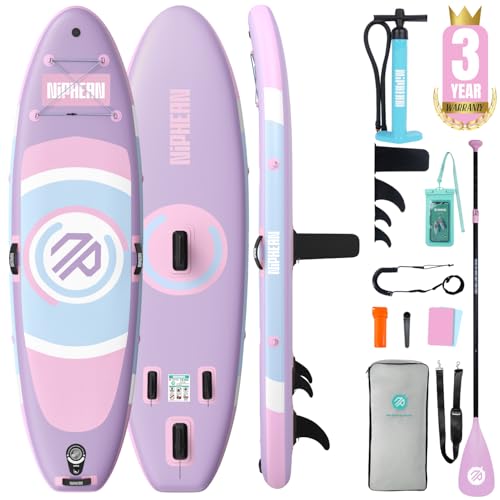
- Size10 ft x 33 in x 6 in
- Weight17.8 lb
- D-rings9, for a seat, strap or cooler
- Handlesthree, including for yoga
- Kitadjustable paddle and full accessory set
- Warranty3 year manufacturer guarantee
- Returns30 day return policy
Best for: A short board that is easy to carry to a remote break
Weight matters more than people admit. The walk to a good break is often long, and a heavy board turns that walk into the reason to stay home.
Ten feet with thirty three inches of width is a stable shape that still turns, which suits someone learning to surf a SUP.
Treat it gently in dumping shore break. At this price the construction is not built for repeated hard landings.
Strengths
- 17.8 lb is exceptionally light for a 10 ft board
- Ten feet is short enough to be lively in small surf
- Nine D-rings, so it converts to a seated board for the paddle out
- Under 160 dollars
Weaknesses
- A budget board that will not take heavy shore break punishment
- 33 in is wide for a wave board
- Size9.8 ft x 6 in
- Fins3, one removable centre and 2 fixed
- CoreV-drop-stitch with premium PVC
- Decknon-slip top deck
- Paddlealuminium and PP, adjustable length
- Kitpump, repair kit and carry backpack
- Waterlake, river and sea
Best for: Finding out whether you enjoy surfing a SUP at all
Three fins is the surf configuration, and it is the reason a board holds a line across a wave face rather than sliding out.
Removing the centre fin turns it loose and skatey, which is worth trying once you can stay on your feet.
At a hundred and nineteen dollars this is a trial rather than a commitment, and it is a fair one. If you keep going, move up to a real wave shape and pair it with a good buoyancy aid.
Strengths
- A three fin setup at 119 dollars, which almost nothing else offers
- 9.8 ft is genuinely short, the second shortest board here
- Removable centre fin, so you can run it as a twin
- The cheapest way to try wave riding on a SUP
Weaknesses
- An aluminium paddle that flexes under a hard stroke
- Budget PVC, so expect a few seasons rather than a decade
How to choose a wave paddle board
Shorter than you think: A board you can turn is a board you can surf. Eight and a half to ten feet is the working range, and every foot beyond that costs you a turn on the wave face. If your only board is over eleven feet, that is why it feels like it does not fit the wave.
Look for rocker in the nose: Rocker is the upward curve at the ends. Without it the nose digs in on the drop and the board stops while you keep going. Wave shapes have obvious rocker, all-round shapes have very little.
Check the fin setup and the fin box: Three fins hold a line across a face, one fin does not. A US or FCS II box lets you fit proper surf fins later, and a moulded plastic fin means you are stuck with what came in the box.
Foam or inflatable, decided by where you paddle: Foam soft tops are safer in crowds and better in real surf, but need a roof rack. Inflatables travel and store, and modern ones handle small waves well. Rivers are the exception, where an inflatable with a retractable fin is the only sensible choice.
Know the break before you paddle out: Wave riding on a big board in a crowd carries real risk to other people. Learn the etiquette of the surf break you are visiting, and start where nobody else is.
Frequently asked questions
Can I surf my normal all-round paddle board?
In small clean waves, yes, and a lot of people do. It will feel slow to turn and it will nose in on anything steep. If you find yourself surfing more than paddling, a shorter board changes the experience completely.Inflatable or hard board for surfing?
Hard foam boards perform better in real surf, because they are stiffer and thinner in the rail. Inflatables win on transport, storage and safety in a crowd, and for rivers they win outright thanks to retractable fins.What leash should I use in waves?
A straight cord, not a coil, and worn at the waist with a quick release. Coiled leashes stretch and recoil hard under wave load, and an ankle leash in whitewater is the setup you cannot release when it matters.Is river surfing different from ocean surfing?
Completely. The wave stays in one place and the water moves through it, so you can ride it for minutes rather than seconds. It also means rocks, current and shallow water, which is why a retractable fin and a quick-release leash are not optional there.Bottom line
The Hala Atcha 86 is the pick because it is the only board here designed from the fin up for surfing rather than cruising, and the retractable Stompbox is the feature that makes river waves a realistic place to use it.
If you are learning in ocean surf, the foam WAVESTORM 9ft6 is the responsible choice for everyone around you as well as for you. And if you want to find out whether any of this appeals before spending, the 119 dollar GYMAX with its three fins is a fair first go.


