

Legwear is the part of paddling kit people think about last and regret first.
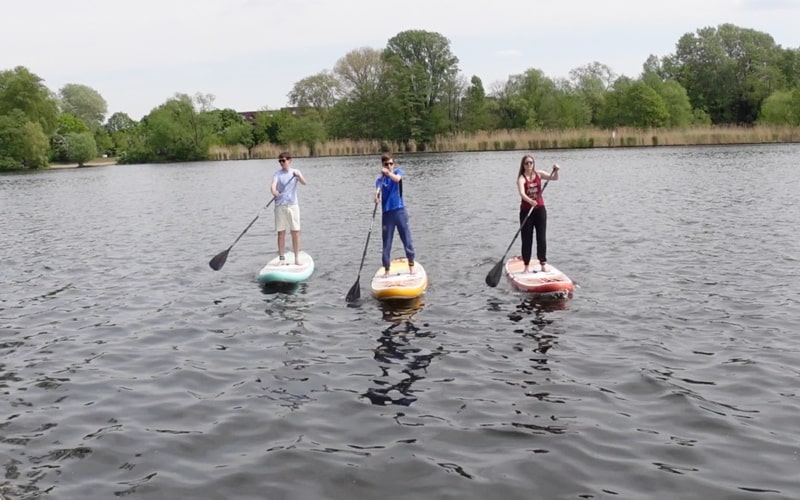
Standing on a board puts your legs in the sun for hours with the water reflecting a second dose upwards, and the same legs get wet every time you kneel, launch or fall. Shorts handle neither problem well.
There are three answers and they solve different things. Neoprene keeps you warm once the water gets cold, UPF leggings keep the sun off without cooking you, and waterproof over-trousers keep spray and wind off on a raw day when you never actually swim.
We compared nine pairs from twenty to sixty dollars across all three types, with the water temperature they suit rather than the marketing category.


The best paddle boarding pants at a glance
| Pants | Type | Best for | Standout feature |
|---|---|---|---|
| Lemorecn 3mm Wetsuit PantsTop pick | 3 mm neoprene | Cold water, spring and autumn | Anti-abrasion knee panels, extended lumbar back |
| Lemorecn 1.5mm Wetsuit PantsBest shoulder season pair | 1.5 mm neoprene | Cool water, warm air | UPF 50+, drawstring waist, flatlock seams |
| DIVE & SAIL 3mm Long PantsBest unisex neoprene | 3 mm SCR neoprene | Cold water, both sexes | Eco neoprene, adjustable waistband, UPF 50+ |
| DIVE & SAIL 2mm Men's ShortsBest neoprene shorts | 2 mm neoprene | Summer water, warm days | High waist, seamless crotch, three layer stretch |
| GoldFin Women's 2mm Wetsuit ShortsBest women's shorts | 2 mm neoprene | Summer water, warm days | Light and unbulky, easy on and off |
| ATTRACO Women's Swim LeggingsBest for sun | UPF swim fabric | Hot sunny days | Two side pockets, high waist that stays up wet |
| Ubestyle Men's UPF 50+ Swim PantsBest men's UPF pair | UPF 50+ swim fabric | Hot sunny days | Four way stretch, drawcord waist, not see through |
| Cressi Hunter Rash Guard PantsToughest UPF pair | Elastic rash guard fabric | Sun and wind, over a wetsuit | Anatomical cut, wears over a wetsuit |
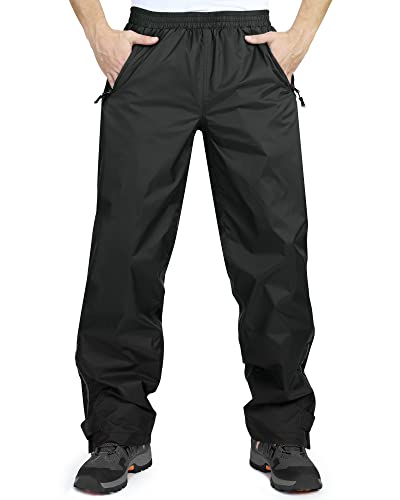
| 33,000ft Waterproof Rain PantsBest for cold wind | Waterproof shell | Cold, wet, windy days | TPU membrane, sealed seams, half leg zips |
The nine pairs in detail
- Material3 mm neoprene
- Seamsflat stitch construction
- Kneesanti-abrasion panelling
- Backhigh waist with extended lumbar coverage
- Suitspaddle boarding, kiteboarding, surfing, swimming
- Carehand wash cold, air dry flat
Best for: Extending the season into spring and autumn without a full wetsuit
Legs go numb long before your core does on a board, because they are wet, exposed to wind and doing very little. Neoprene on the legs alone fixes most of that.
The knee panels are the detail worth paying for. Paddlers kneel to launch, to rest and to get through chop, and a deck pad wears plain neoprene through in a season.
Pair them with a rash vest in mild weather or a full wetsuit when the water drops below about 15 C.
Strengths
- Three millimetres is the thickness that actually keeps legs warm
- Knee panels survive kneeling on deck pads, which plain neoprene does not
- High back covers the gap a rash vest leaves when you bend forward
- Half the price of a full wetsuit and far less faff
Weaknesses
- Too warm above roughly 22 C water
- Neoprene is slow to dry and heavy in a bag

- Material1.5 mm neoprene
- Waistadjustable drawstring
- ProtectionUPF 50+, jellyfish and abrasion
- Seamsflatlock stitching
- Carerinse in fresh water
- Fitsnug, reduces water entry
Best for: Cool water on a warm day, which is most of spring and autumn
Most paddling happens in the awkward middle, where the air is pleasant and the water is fifteen degrees colder than it looks.
A millimetre and a half is the right answer there. Warm enough that your legs work properly, thin enough that you do not overheat standing in the sun.
Size up rather than down if you are between sizes. Neoprene that is too tight restricts the knee bend you need to brace on a moving board. The same logic applies to neoprene shoes, where a tight fit cuts circulation and makes you colder, not warmer.
Strengths
- Thin enough to wear when the air is warm and the water is not
- Drawstring waist stops the slide that thicker pants get away with
- UPF 50+ as well as thermal, so it covers both problems
- Twenty nine dollars, cheap for real neoprene
Weaknesses
- 1.5 mm is not enough below roughly 18 C water
- Snug fit is unforgiving if you are between sizes

- Material3 mm SCR neoprene, eco friendly, high stretch
- Waistadjustable waistband
- Seamsflatlock, no chafing
- ProtectionUPF 50+ and jellyfish barrier
- Dryingfast drying thermal performance
- Suitssnorkelling, kayaking, SUP, spearfishing
Best for: A household that wants one pair of warm pants to share
Three millimetres in a stretchier compound is the useful compromise: the warmth of thick neoprene without the stiffness that makes it hard to kneel and stand.
The jellyfish claim matters more than it sounds in late summer, when warm coastal water and blooms arrive together.
Rinse in fresh water every time. Salt left in neoprene stiffens it and shortens its life more than the paddling ever does.
Strengths
- Cut for both sexes, so sizing works across a couple
- SCR neoprene stretches more than standard neoprene at the same thickness
- Adjustable waistband handles the fit differences between wearers
- Dries faster than most three millimetre neoprene
Weaknesses
- Runs snug, and the maker admits it
- Unisex cut fits nobody perfectly

- Material2 mm, 90 percent SCR neoprene and 10 percent nylon
- Waisthigh waist, adjustable
- Crotchseamless panels
- Stretchthree layer elastic fabric
- Seamsflatlock
- Suitssnorkelling, kayaking, surfing, SUP
Best for: Warm water where you still want a bit of insulation and abrasion cover
Neoprene shorts are the summer answer. They cover the part of you that sits on the board, and they leave everything else free.
Most of the value is abrasion rather than warmth. Kneeling and sitting on a textured deck pad in bare skin gets uncomfortable quickly.
Wear them under boardshorts and nobody knows they are there, which is how most people end up using them.
Strengths
- Two millimetres takes the edge off cool water without cooking you
- High waist keeps the kidneys covered, which is where chill starts
- Seamless crotch, so there is nothing to rub on a long paddle
- Nice under boardshorts if you dislike bare legs on a deck pad
Weaknesses
- Shorts leave the calves exposed to sun and cold
- Not enough on its own below about 20 C water
GoldFin Women Wetsuit Shorts, 2mm Neoprene
Best women's shorts- Material2 mm neoprene
- Fitdesigned cut rather than a scaled men's pattern
- Weightlight, adds buoyancy without bulk
- On and offeasy, no zip needed
- Usesswimming, surfing, water aerobics, SUP
- Noteslight neoprene odour at first, airs out
Best for: Women who want neoprene shorts rather than a shortened men's pair
Fit is the whole argument here. A men's neoprene short scaled down sits wrong at the waist and gapes at the thigh, and gaping neoprene flushes cold water.
The buoyancy is a small side effect worth knowing about. Neoprene floats, so a pair of shorts makes a tired swimmer's legs sit slightly higher.
Air new neoprene outdoors for a day before wearing. The smell people complain about disappears and is not a fault.
Strengths
- Cut for women rather than resized, which is rarer than it should be
- Two millimetres adds a little buoyancy as well as warmth
- Easy on and off, so they work as a changing layer at a busy launch
- Thirty dollars, the same as the men's equivalents
Weaknesses
- Colour choice is limited by size, so check availability
- Shorts only, so the calves stay exposed
- Fabricquick drying swim fabric with sun protection
- Lengthfull length
- Waisthigh and wide, stays up when wet
- Pocketstwo side pockets
- Seamsflat seam to reduce chafing
- Usesswimming, surfing, kayaking, paddling
Best for: Long sunny days where sunburn is the actual risk
Sunburn on the tops of the thighs and the backs of the calves is the classic paddler injury, because that is where the reflected light lands.
Full length leggings solve it without sunscreen you have to reapply every two hours in the water.
Use the pockets on the board and empty them before swimming. A phone belongs in a waterproof pouch, not in a wet legging pocket.
Strengths
- Twenty dollars for full leg sun cover that also swims
- Pockets that hold a phone, which almost no swim legging has
- High wide waistband does not roll down when wet
- Dries fast enough to drive home in
Weaknesses
- No warmth at all, so useless once the water turns cold
- Pockets full of water drag noticeably while swimming

- Fabricfour way stretch sun safe swim fabric
- RatingUPF 50+
- Lengthankle length
- Waistmid waist elastic with a pull cord
- Opacitythick enough not to be see through when wet
- Usesswimming, SUP, waterskiing, fishing
Best for: Men who want the sun cover leggings give without a wetsuit
Men buy sun leggings far less often than women, which shows up later as leathery shins and a dermatologist appointment.
The pull cord is not decoration. Elastic alone lets swim leggings slide when you fall in from a moving board.
Pair them with a long sleeved rash top and the sunscreen problem reduces to face, hands and feet.
Strengths
- Genuine UPF 50+ across the whole leg
- Four way stretch, so it does not fight a wide stance
- Pull cord waist keeps them on through a fall
- Thirty dollars, and they double as gym or swim wear
Weaknesses
- Thin fabric, so nothing between your knees and the deck pad
- Dark colours get hot in direct sun despite the rating

- Fabricstrong elastic synthetic rash guard material
- Cutanatomical
- ProtectionUPF rated, blocks wind
- Layeringwearable over a wetsuit
- PatternsCressi camouflage designs
- OriginCressi, Italian diving brand since 1946
Best for: Hard use, spearfishing and layering over neoprene
Rash guard fabric over a wetsuit is a trick from spearfishing that works on a board too: it stops neoprene abrading on rock and deck.
Wind blocking is the underrated part. Wet legs in a fifteen knot breeze lose heat fast, and a thin windproof layer changes that disproportionately.
At this price it only makes sense if you are in the water often. For a few sunny outings, the twenty dollar leggings do the same UV job.
Strengths
- Built to a diving brand's standard rather than a fashion one
- Wind protection as well as sun, which thin leggings lack
- Wears over a wetsuit as an abrasion layer
- Anatomical cut moves properly at the knee and hip
Weaknesses
- Sixty dollars, three times the budget leggings
- Camo patterns are not to everyone's taste on a lake
- WaterproofingTPU membrane, fully seam sealed and welded
- Breathabilitymesh lining, rated 5000
- Waistfully elasticated with an inner drawstring
- Legshalf leg zips with hook and loop cuffs
- Pocketstwo zipped
- Useshiking, fishing, cycling, paddling
Best for: Cold, wet, windy days when you do not plan to get in
Winter paddling on flat water is mostly dry paddling. Cold rain and wind, not immersion, is what ends those sessions early.
A shell over thermal leggings handles that far better than neoprene, which is warm when wet and clammy when dry. If you do plan to be in cold water rather than above it, skip both and read up on drysuits instead.
The leg zips are the practical feature. Wet shoes and long trousers never work together and half zips solve it in ten seconds.
Strengths
- Genuine sealed seams rather than a water resistant coating
- Half leg zips mean they go on over shoes at the launch
- Zipped pockets keep keys secure on a windy bank
- Thirty five dollars for a proper shell
Weaknesses
- Useless once you fall in, since they fill and stay wet
- Not swim gear at all, purely an outer layer
How to choose paddling legwear
Choose by water temperature, not air temperature: A twenty five degree day over twelve degree water still needs neoprene, because your legs are wet the whole time. As a rough guide, above 22 C water go with UPF leggings, from 18 to 22 C use 1.5 to 2 mm neoprene, and below 18 C move to 3 mm or a full suit.
Sun is the risk you underestimate: Water reflects a large share of ultraviolet light straight back up at you, so legs get burned from below as well as above. A UPF 50+ legging does not wash off, does not need reapplying and does not sting your eyes when you sweat.
Look at the knees: Deck pads are deliberately grippy and that grip is abrasive. Pants with reinforced knee panels last several seasons of kneeling; plain neoprene wears shiny and then through in one.
Waistbands decide whether you keep wearing them: A drawstring or a wide high waistband stays put when you fall in and climb back on. Plain elastic slides down when wet, which is the single most common reason a pair gets left at home.
Rinse and dry flat: Neoprene dies from salt, sun and hanging on a thin hanger, which stretches the shoulders and waistband out of shape. Rinse in fresh water, dry in shade, store flat or folded loosely. Neoprene is a closed cell foam and its insulation comes from the gas trapped inside it, which is exactly what repeated stretching and heat destroy.
Frequently asked questions
Do I need wetsuit pants or a full wetsuit?
Pants plus a top layer covers water from roughly 15 to 22 C and is far more comfortable in warm air, since your arms and chest stay free. Below about 15 C, or for anything where you expect to be in the water rather than on it, a full suit is the right call.What thickness of neoprene should I get?
For paddle boarding, 1.5 to 2 mm covers cool water on warm days and 3 mm covers genuinely cold water. Thicker than 3 mm restricts the knee bend you need on a board and is aimed at divers, who are not standing up.Are swim leggings warm at all?
No. They are sun protection and chafe protection, and once wet in a breeze they are colder than bare legs. If warmth is the goal, even 1.5 mm neoprene is a completely different garment.Can I wear normal leggings for paddle boarding?
Cotton or gym leggings soak up water, get heavy, chafe and hold the cold against you. Any swim or surf fabric is better. If the choice is gym leggings or nothing, keep them for warm days where you stay dry and expect the sun cover to be poor.Bottom line
For most paddlers the 3 mm Lemorecn pants are the purchase that changes the calendar, since they turn cold-water months into paddling months for forty dollars. If your paddling is summer only, twenty dollar UPF leggings do more good than any neoprene, because sunburn is the injury you will actually get.
Add a shell only if you paddle through winter on flat water. The 33,000ft over-trousers keep the wind and rain off on the days when the water never touches you, and neoprene handles every day when it does.


