

A board bag is bought for one of two reasons, and they need very different bags.
Either the board lives outside and the sun is slowly destroying it, or the board goes on a roof rack and into an aircraft hold and needs real padding around the nose and tail.
A stretchy sock does the first job beautifully and the second not at all. A 10 mm travel bag does the second job and is overkill in a garage.
We compared seven covers for stand up paddle boards, from a cotton canvas sock at under a hundred dollars to Curve’s heavyweight travel bag, and sorted them by which job they are for.

![Ho Stevie! Canvas SUP Bag Cover - Durable Canvas Protective Bag for Stand Up Paddle Boards [CHOOSE 8’, 9’, 10’, 11’, 12’] (Black/Gray/Green, 10'0")](https://m.media-amazon.com/images/I/41hqtb9hK5L._SL500_.jpg)
The best paddle board cover bags at a glance
| Cover | Job | Padding | Standout features |
|---|---|---|---|
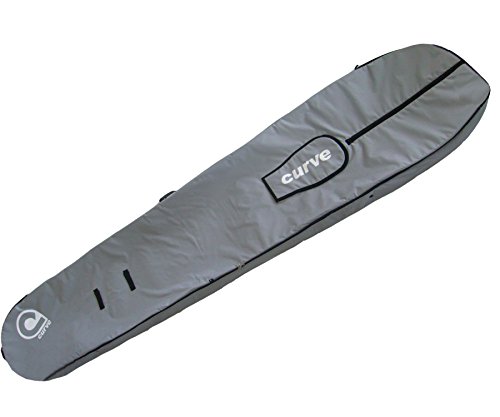
| Curve SUP Travel Bag, 10mmTop pick | Travel and transport | 10 mm foam core | 600D polycanvas base, reflective upper, padded paddle holder |
| ISLE SUP Day BagBest for roof racks | Transport and storage | 5 mm closed cell | Heat reflective base, external paddle straps, velcro fin strap |
| Ho Stevie! Canvas SUP BagBest value | Storage and sun | Canvas, no foam | 100 percent cotton canvas, extra wide, snag free, fin stays on |
| Abahub Board Travel BagMost storage | Travel and transport | 8 mm foam core | 1680D nose and tail, four air vents, 29 in external pocket |
| KONA SURF CO. Insulated BagHottest climates | Travel and storage | Thick foam, insulated | Waterproof lining, air vents, wide coffin shape, paddle straps |
| Curve Compact Wave BagFor wave boards | Travel, short boards | 7 mm plus 20 mm ends | Boosted nose and tail zones, corrosion proof non metal zip |
| Ho Stevie! SUP SockEasiest to live with | Storage and short trips | Knit, padded nose | Stretch knit polyester, 600D padded nose, tail stash pocket |
The seven covers in detail
- Jobtravel and airline transport
- Padding10 mm foam core
- Shell600D water resistant polycanvas base, reflective upper
- Sizes9'0 through 14'0
- Extraspadded paddle holder, adjustable fin slot, YKK zip and buckles
Best for: Hard boards that fly, or live on a roof rack most weekends
If the board flies, this is the bag. Ten millimetres of foam is the difference between a baggage handler dropping your board and a baggage handler ending your trip.
The full length zip matters more than the specification sheet suggests. A board that drops into an open bag goes in without scraping the rails, which is exactly where cheaper bags leave marks.
Curve size their bags tightly, so measure the board rather than trusting the model name. A bag two sizes too big lets the board move, and movement is what causes dings. If the rails have already taken damage, our repair kit comparison covers the fix.
Strengths
- Ten millimetres of travel specification foam, the most protection here
- Full length zip, so the board drops in rather than being forced in
- Reflective upper keeps the inside temperature down on a hot roof
- YKK zips and buckles throughout, backed by a twelve month guarantee
Weaknesses
- The most expensive bag in this comparison
- Heavy and bulky, more bag than a garage board needs
- Jobtransport and storage
- Padding5 mm closed cell foam
- Shellwater resistant, heat reflective 266PE base
- Reinforcementextra layers at nose and tail
- Extrasremovable non slip shoulder strap, external paddle straps, velcro fin strap
Best for: The weekly drive to the lake with the board on the roof
Most damage happens between the garage and the water, not on it. A day bag is built for exactly that trip: enough padding for rack straps and a car park, and a reflective base so the board is not cooking on the roof.
The velcro fin strap and the external paddle straps mean one trip from car to beach instead of two. Small thing, noticed every single time.
ISLE build these for their own boards, so the shape is a paddle board shape rather than a stretched surfboard bag. Boards travel best when they cannot shift, and our roof rack comparison covers the other half of that.
Strengths
- Heat reflective base, which is the one thing a roof rack bag must have
- Nose and tail reinforcement where rack straps and kerbs do their damage
- External paddle straps, so the paddle travels with the board
- Corrosion resistant zips, a real weak point on cheaper bags
Weaknesses
- 5 mm is a day bag, not enough for an aircraft hold
- Sized per board length, so check the fit carefully
- Jobstorage and sun protection
- Material100 percent cotton canvas
- Sizes8' through 12', extra wide, 38 to 44 in
- Finstays on, no need to remove
- Guarantee30 day satisfaction return
Best for: A board stored in a carport, on a balcony or under a deck
UV is what kills a board that never leaves home. Discolouration first, then the resin going chalky, then fiberglass flaking off the rails. A cover stops all of it for under a hundred dollars.
Canvas has one clear advantage over the stretchy socks: it does not snag. Leash velcro pulls threads out of knit covers within a season, and canvas simply does not care.
The rule with any cotton cover is that the board goes in dry. A wet board under canvas in a warm garage grows exactly what you would expect. If you want the detail on how sunlight breaks polymers down, it is worth ten minutes.
Strengths
- Cotton canvas blocks UV completely, which is the actual job
- Does not snag on leash velcro the way knit socks do
- Extra wide, so it fits inflatables and wide hard boards alike
- You can leave the fin in place
Weaknesses
- No foam, so this is not a travel bag
- Cotton holds moisture, so the board must be dry before it goes in

- Jobtravel and transport
- Padding8 mm foam core
- Shellwater resistant PE with 1680D reinforcement
- Ventsfour 4 in air vents
- Extras29 x 12 in external zip pocket, internal fin pocket, 3/5 zip opening
Best for: Travel where the bag has to carry the gear as well as the board
The external pocket is why this bag exists. Fins, leash, pump hose, a towel and a wetsuit all go in the bag rather than loose in the car.
Air vents look like a gimmick and are not. A dark bag on a hot roof turns into an oven, and heat is what delaminates a board sitting in traffic.
Coverage runs to 12 feet by 33 inches. Check the listing's size chart against your board before ordering, because Abahub sell one bag under several size labels.
Strengths
- A 29 inch external pocket, the largest storage here
- 1680D reinforcement exactly at the nose and tail
- Four air vents, so heat does not build up inside
- YKK number 10 zips, nickel plated
Weaknesses
- 8 mm is good but not Curve's 10 mm
- Sized up to 12'0, so the longest touring boards are out

- Jobtravel and storage in heat
- Paddingthick foam with waterproof lining
- Shapewide coffin, fits most SUPs
- Ventsyes, plus carry handles and shoulder strap
- Finvelcro seam for a single fin
Best for: Boards that sit in the sun in Florida, Spain or Queensland
Insulation is a different problem to padding. In a hot climate a board on a roof or a driveway can reach temperatures that soften resin, and an insulated bag with vents is a genuine answer to that.
The coffin cut fits nearly everything, which is convenient and also the weakness. A narrow race board rattles around inside, so pack a towel alongside it.
Consider this one if the board's enemy is heat rather than handling. If it is handling, the Curve bag protects better for less.
Strengths
- Insulation plus a waterproof lining, built for heat rather than knocks
- Wide coffin cut fits nearly any paddle board, including wide inflatables
- Vented, so trapped heat can escape
- Velcro fin seam, the fin stays where it is
Weaknesses
- The priciest bag here and thinner on detail than Curve
- Bulky, and the wide cut lets narrower boards move inside

- Jobtravel, short and wide boards
- Padding7 mm core, 20 mm boosted nose and tail
- Shell600D polycanvas base, silver tarpee upper
- Sizes8'2 to 12'6
- Zipbig tooth non metal, guaranteed not to corrode
Best for: Surf style SUPs, where the nose and tail take the hits
Curve made a sensible decision here: put the foam where boards break. Twenty millimetres at each end and seven in the middle protects better in practice than an even ten everywhere.
The non corroding zip is the other reason to pick this over a cheaper bag. A seized metal zip is how bags die, and salt air seizes them within a couple of seasons.
The cut is for wave style boards, 8'2 up to 12'6 and wide. If your board is a long thin tourer, take the standard Curve bag instead.
Strengths
- 20 mm foam at the nose and tail, the two places boards actually break
- Non metal zip that cannot corrode, unlike every metal zip in salt air
- Cut for short wide wave boards rather than long touring shapes
- Internal stash pocket kept away from the board, so wax cannot press in
Weaknesses
- Too short for touring and race boards
- Thinner in the middle than the 10 mm bag
![Ho Stevie! SUP Sock Cover - Stretchy Protective Bag for Stand Up Paddle Boards [CHOOSE SIZE & COLOR] (Black/White, 11'0")](https://m.media-amazon.com/images/I/51gpFG+k6iL._SL500_.jpg)
- Jobstorage and short trips
- Materialstretch knit plush polyester
- Nosereinforced 600D nylon over padding
- Sizes8' to 12', 30 to 36 in unstretched
- Extrasvelcro stash pocket at the tail, rolls up small
Best for: A board that comes in and out of storage several times a week
The best cover is the one you can be bothered to use. A sock slides on in seconds, which is why boards in socks stay covered and boards in zipped bags often do not.
The padded nose is what separates this from a plain sock. That is where boards meet doorframes and car boots, and 600D nylon over foam handles it.
Two limits worth knowing: knit fabric picks at leash velcro, and it is not a full UV barrier. For a board stored in direct sun year round, the canvas bag is the safer choice.
Strengths
- On and off in seconds, which means it actually gets used
- Padded reinforced nose, the one spot a sock needs protection
- Rolls up small enough to take with you
- Plush lining that does not scratch a gloss finish
Weaknesses
- Knit fabric snags on leash velcro over time
- Stretch knit lets some UV through, less protection than canvas
How to choose a paddle board cover
Decide which job you are buying for: Sun protection at home and impact protection in transit are different products. A sock or a canvas cover solves the first, a foam travel bag solves the second, and buying the wrong one costs either money or a board.
Padding thickness: Under 5 mm is a dust cover. Five millimetres survives a roof rack and a car park. Eight to ten millimetres is what you want before a board goes into an aircraft hold, and the foam matters most at the nose and tail.
Measure the board, not the model: Bag sizes are given in board length, but width is what usually fails. Inflatables are wide, wave boards are wider still, and a bag that fits a 10'6 tourer may not close around a 10'6 all rounder.
Heat is the quiet killer: A dark bag on a roof in summer gets hot enough to soften resin and to swell an inflatable badly. Look for vents, a reflective or light coloured upper, and never leave an inflated board bagged in the sun.
Zips and straps fail first: Metal zips corrode in salt air and cheap buckles crack. YKK zips, or a non metal big tooth zip, and a padded detachable shoulder strap are the details that decide whether the bag lasts five years or one.
Frequently asked questions
Do I need a bag for an inflatable board?
Not for protection in transit, since it travels rolled in its own backpack. A cover is still worth it if you store the board inflated, because UV and heat damage the PVC and the seams over time. Choose a light coloured cover and keep it out of direct sun.Can I leave the fin in place?
With socks and canvas covers, usually yes. With foam travel bags you normally take the centre fin out and use the adjustable fin slot for the fin box, since a fin under pressure inside a tight bag is how fin boxes crack.Is 5 mm padding enough for flying?
No. Airlines charge for a board whether it survives or not, and 5 mm will not absorb a drop onto a concrete floor. Use 8 to 10 mm with reinforced ends, and pad the nose and tail with towels inside the bag.Should the board be dry before it goes in the cover?
Always. Salt water trapped in a closed bag corrodes zips, and moisture under canvas in a warm garage grows mould on the cover and stains the board. Rinse, dry, then bag.Bottom line
For a board that travels, the Curve 10 mm bag is the safest money here, with the ISLE day bag as the lighter choice if the furthest it goes is the roof of the car. For a board that mostly sits at home losing colour, the Ho Stevie! canvas cover does the important job for a fraction of the price.
Between those, pick by detail: the Abahub if you want the bag to swallow your gear too, the KONA in a hot climate, the compact Curve for a wave board, and the sock if convenience is what will actually keep the board covered. Getting the board to the water is the other half of the problem, and our paddle board cart comparison deals with that.


