

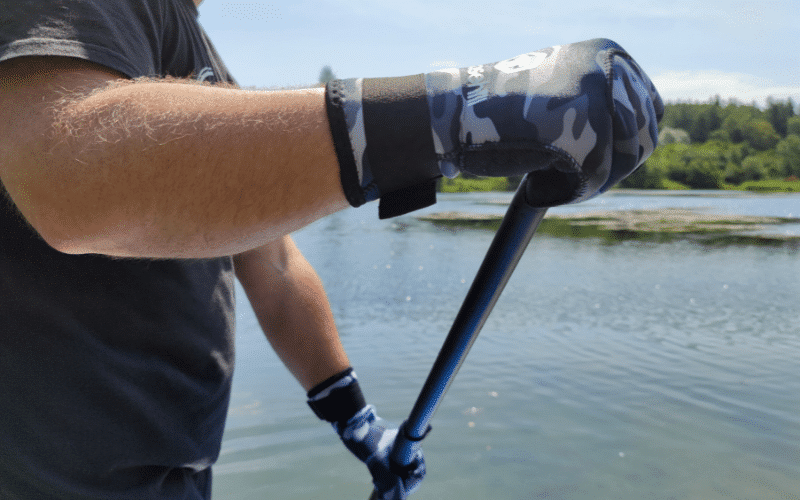
Paddling gloves solve two completely different problems, and buying the wrong type is why so many pairs end up unused in a garage.
The first problem is cold. That needs neoprene, and the thickness decides everything: 1.5 mm for cool water, 2 mm for spring and autumn, 3 mm and up for winter.
The second problem is sun and blisters on warm days. That needs the opposite glove, a thin fingerless or half finger design with a padded palm and UPF fabric, where warmth would only make your hands sweat.
We compared ten gloves for paddle boarding across both categories, from a nine dollar neoprene pair to sailing gloves built for a full season on the water.

The best paddle boarding gloves at a glance
| Glove | Type | Thickness | Standout features |
|---|---|---|---|
| Gill Deckhand Short FingerTop pick | Sailing, three quarter finger | Thin | Double layer Amara palm, UV 50+, water repellent, offset seams |
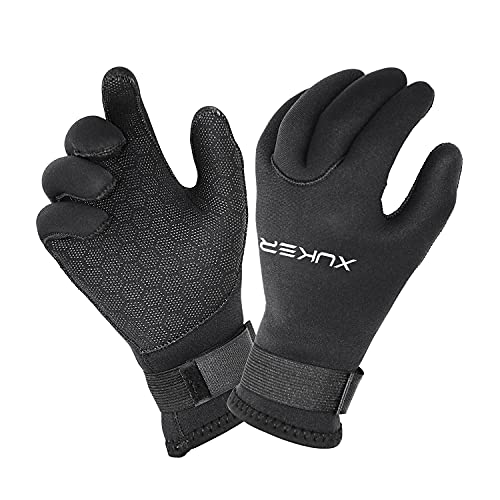
| XUKER Water Gloves 3mmBest for cold water | Neoprene, five finger | 3 mm | Glued and blind stitched, anti-slip printed palm, wrist strap |
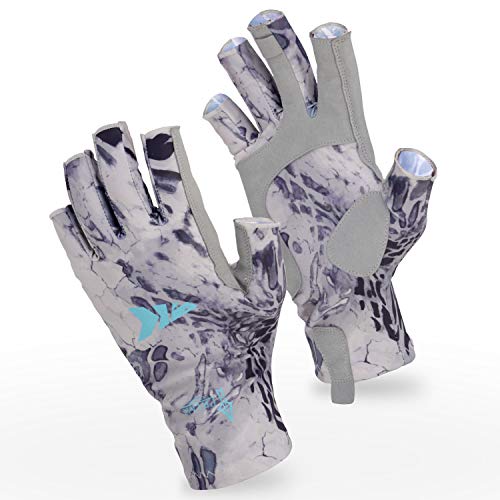
| KastKing Sol ArmisBest sun protection | Fingerless sun glove | Thin | SPF 50, breathable poly spandex, microfiber palm, long cuff |
| FitsT4 Half Finger PaddedBest against blisters | Half finger, padded palm | Thin | Vented synthetic leather palm, double layer thumb, wrist strap |
| H2Odyssey 2mm Paddle GlovesBest mid season pair | Neoprene, five finger | 2 mm | Padded non-slip palm, velcro cuff, made for paddling |
| Cressi Tropical 2mmBest build quality | Neoprene, five finger | 2 mm | Elastic neoprene, anti-slip scratch resistant palm, metallite lining |
| Skyone Wetsuit GlovesBest value in neoprene | Neoprene, five finger | 3 or 5 mm | Glued and blind stitched, textured grip palm, kids sizes |
| Tilos Tropical Dive GlovesMost breathable | Neoprene mesh | 1.5 mm | X-Foam limestone neoprene, Amara palm, hook and loop cuff |
| Micosuza 1.5mm Five FingerCheapest neoprene | Neoprene, five finger | 1.5 mm | Flat stitch construction, four way stretch, UV protection |
| toolant Waterproof Winter GlovesBest for freezing days | Dipped latex over knit | Insulated | Fully waterproof, fleece lining, touchscreen palm, sandy grip |
The ten gloves in detail
- Typesailing glove, three quarter fingers
- Palmdouble layer Amara reinforcement
- SunUV 50+ four way stretch back
- Waterwater repellent, quick drying
- Cuffreduced length with silicone grip pull
Best for: Regular paddlers who want one glove for the whole warm season
Sailing gloves have been solving the paddling problem for decades: grip on a wet shaft, protection against blisters, sun cover on the back of the hand, and nothing over the fingertips.
The Amara palm is the reason to buy them. Synthetic leather that neither soaks up water nor stiffens as it dries, which is exactly what cheap leather palmed gloves do after two sessions.
Wraparound palm protection means no side seams pressing into your hand where the paddle shaft sits. Small detail, and the one you notice on hour three.
Strengths
- Amara palm does not absorb water and dries fast, unlike leather
- UV 50+ across the back of the hand, where paddlers actually burn
- Offset finger seams remove the pressure points that cause hot spots
- Open fingertips, so you can still work a buckle or a phone
Weaknesses
- No warmth at all, this is a warm weather glove
- Around twenty nine dollars
- Typeneoprene, five finger
- Thickness3 mm
- Seamsglued and blind stitched
- Palmanti-slip rubber print
- SizesXS to 2XL
Best for: Cold water paddling from autumn through spring
Once the water drops below roughly fifteen degrees, thin gloves stop being enough and you want real neoprene. Three millimetres is the compromise most paddlers land on.
Blind stitching matters more than the brand name. Flat stitched seams let water through with every stroke, and a glove that keeps flushing never warms up.
If you are paddling in that sort of water, the gloves are only part of the answer, and our wetsuit comparison covers the rest of the body.
Strengths
- 3 mm is the sweet spot for cold water without losing all dexterity
- Glued and blind stitched, so far less water works through the seams
- Printed rubber palm grips a wet shaft properly
- Wrist straps keep the flush of cold water down
Weaknesses
- Too warm for summer, your hands will sweat
- Thick neoprene makes fiddly jobs like a buckle harder
- Typefingerless sun glove
- RatingSPF 50
- Fabricbreathable four way stretch poly spandex
- Palmmicrofiber reinforcement
- Cuffextra long for overlap with a sleeve
Best for: Hot, bright days where sunburn is the only real problem
The back of the hand is the most reliably burnt part of a paddler, because it faces straight up for hours and sunscreen washes off it first.
These fix that for fifteen dollars. Thin, breathable and fingerless, so nothing about your grip or your dexterity changes.
Wear them with a long sleeved top and the cuff overlap leaves no gap. The same logic applies to the rest of you, which is what our paddle boarding shirt guide is about.
Strengths
- SPF 50 over the back of the hand, the spot sunscreen always misses
- Breathable spandex that stays cool instead of trapping heat
- Long cuff overlaps a long sleeve, so no burnt stripe of wrist
- Fifteen dollars, machine washable
Weaknesses
- No padding worth the name, so long sessions still cause blisters
- No warmth, purely a sun glove

- Typehalf finger, padded palm
- Palmvented padded synthetic leather
- Reinforcementdouble layer between thumb and index finger
- Backhigh stretch spandex
- Cuffhook and loop wrist fastener
Best for: Long distance days and anyone whose hands blister on the shaft
Blisters come from the same two square centimetres of skin between thumb and index finger, and a padded palm glove is the direct answer.
The doubled layer at that point is the specification to check. It is where every cheap glove wears through first, usually mid season.
Twenty dollars, and the ventilation keeps them usable in summer. If your hands hurt after long paddles rather than burn, buy these rather than a sun glove.
Strengths
- Real padding where the shaft rubs, unlike thin sun gloves
- Doubled fabric between thumb and index finger, the first place gloves fail
- Vented palm, so the padding does not turn into a sweat pad
- Half finger design leaves the fingertips free
Weaknesses
- Padding reduces the feel of the shaft slightly
- Spandex back offers less sun protection than a rated UPF fabric

- Typeneoprene, five finger
- Thickness2 mm
- Palmpadded non-slip textured palm
- Cuffvelcro adjustable
- Designbuilt for paddling and rowing
Best for: Spring and autumn, when 3 mm is too much and nothing is too little
Most paddling happens in water that is neither warm nor cold, and 2 mm is the thickness built for exactly that.
What sets these apart from generic dive gloves is the padded palm. You get thermal protection and blister protection in the same glove, which is unusual.
Ignore the webbing between the fingers, which is a swim feature the brand carried over. It costs nothing, but it does nothing for you either.
Strengths
- 2 mm is the most useful thickness for most temperate paddling
- Padded palm, so it protects against blisters as well as cold
- Velcro cuff seals properly against flushing
- Soft enough that it does not fight your grip
Weaknesses
- Thirty dollars for a 2 mm glove
- The webbed finger design is aimed at swimming, and does nothing for paddling
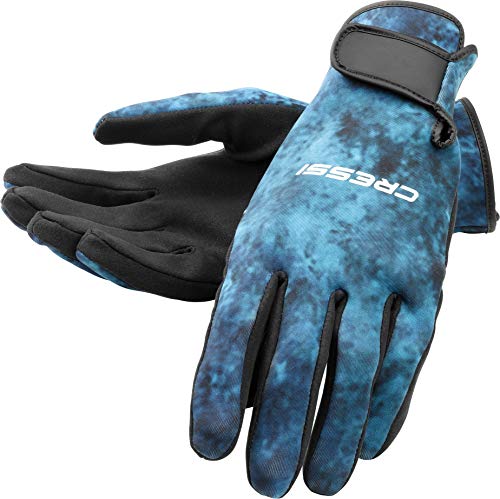
- Typeneoprene, five finger
- Thickness2 mm
- Neoprenepremium elastic
- Palmanti-slip coating on scratch resistant textile
- LiningMetallite inner, large velcro wrist area
Best for: Paddlers who would rather buy once than replace every season
Cressi make dive equipment, and these are a dive glove that happens to be ideal for paddling: 2 mm, very stretchy, with a palm coating designed to survive being dragged over rock.
The elasticity is the point. Cheap 2 mm neoprene fights your fingers when you close them, and after an hour that becomes real fatigue.
Expect them to last several seasons. That changes the arithmetic against a ten dollar pair you replace every year.
Strengths
- Cressi build quality, and it shows at the seams and the cuff
- Very elastic neoprene, so full finger movement is preserved
- Scratch resistant palm textile that survives shells and rocks
- Large velcro panel makes the wrist adjustment genuinely usable
Weaknesses
- Thirty dollars, at the top of the 2 mm bracket
- Camouflage patterns aimed at spearfishing rather than paddling
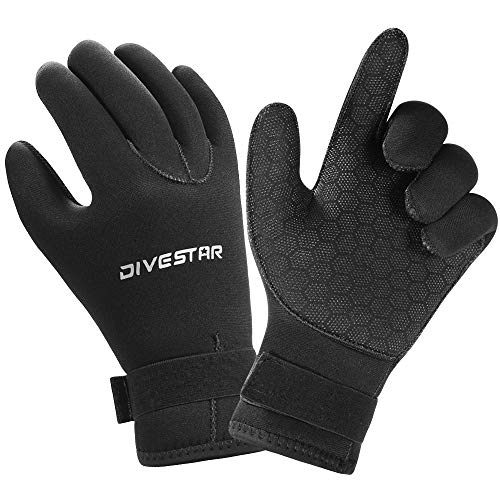
- Typeneoprene, five finger
- Thickness3 mm or 5 mm
- Seamsglued and blind stitched
- Palmhi-grip textured
- Sizeskids, women and men
Best for: Families, and anyone who wants cold water gloves without spending thirty dollars
Seventeen dollars for a glued and blind stitched neoprene glove is good value, since that construction is what actually keeps water out.
The 5 mm option exists for genuinely cold winter paddling. Be aware that at that thickness your hands lose a lot of feel, and gripping becomes work.
For most people the 3 mm version is the right choice, and it is the one to buy if you are unsure.
Strengths
- Blind stitched seams at around seventeen dollars, which is rare
- Choice of 3 mm or 5 mm for genuinely cold water
- Kids sizes, so the whole family can be covered
- Textured palm holds small items as well as the shaft
Weaknesses
- Fit is less refined than the Cressi or the XUKER
- 5 mm is very stiff, only worth it in winter
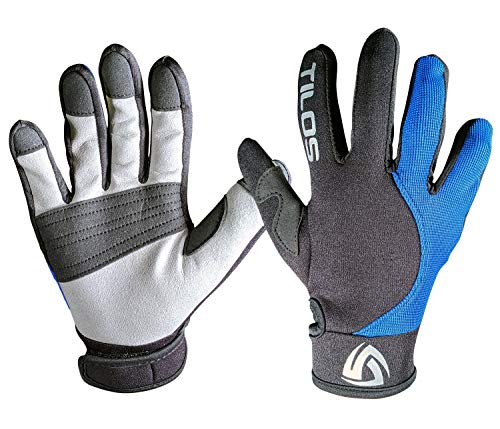
- Typeneoprene mesh
- Thickness1.5 mm
- NeopreneX-Foam limestone based, hypoallergenic
- PalmAmara for grip and blister protection
- Cuffadjustable hook and loop
Best for: Warm water where you want grip and abrasion protection, not warmth
These sit between a sun glove and a wetsuit glove: enough neoprene for grip and abrasion resistance, thin and mesh backed enough that summer hands stay cool.
The material is worth a note. X-Foam is made from limestone instead of petroleum, which is a meaningful difference in how neoprene is produced.
Forty four dollars is a lot for 1.5 mm. Buy them for the build and the breathability, not for warmth.
Strengths
- Mesh back breathes, so hands do not overheat in summer
- Amara palm handles both grip and blisters
- Limestone based X-Foam neoprene rather than petroleum based
- Four way stretch with a proper adjustable cuff
Weaknesses
- The most expensive glove here at around forty four dollars
- 1.5 mm gives very little warmth

- Typeneoprene, five finger
- Thickness1.5 mm
- Constructionflat stitch
- Stretchfour way stretch with good recovery
- ExtrasUV protection, guards against sea lice and jellies
Best for: A first pair, or a spare in the dry bag
At ten dollars this is the pair to keep in the bag for the day you did not expect to need gloves.
The manufacturer is honest about the limits: neoprene gloves are not waterproof, and flat stitched seams let water in at the cuff and the stitching. That is fine for a thin summer glove.
Where they earn their keep is protection, from sun, from shells on the launch, and from the stinging things in warm salt water.
Strengths
- Ten dollars for a real neoprene glove
- Thin and light, so grip and feel are barely affected
- Useful protection against jellyfish and sea lice as well as sun
- Stretches well and recovers its shape
Weaknesses
- Flat stitched, so water passes through the seams freely
- 1.5 mm and flat stitched means very little actual warmth

- Typedipped latex over an acrylic nylon knit
- Waterproofingfully dipped double layer, 100 percent waterproof
- Liningbrushed fleece
- Gripsandy dipped rubber palm
- Extrasgraphene touchscreen palm, velcro wrist
Best for: Winter paddling in air that is colder than the water
On a still winter day when the air is colder than the water, a fully waterproof insulated glove beats neoprene, because neoprene works by letting a thin layer of water in and warming it.
The trade is obvious. If one of these fills, it stays full, so this is a glove for staying on the board rather than for surf.
The touchscreen palm is a genuine convenience in winter, when taking a glove off to answer a message means several minutes of cold hands afterwards.
Strengths
- Genuinely waterproof, which no neoprene glove is
- Fleece lining is warmer than 3 mm neoprene in cold air
- Sandy rubber palm grips a wet shaft extremely well
- Touchscreen capable, so the phone stays usable
Weaknesses
- Not a watersports glove, and it will not drain if it floods
- Bulky, with the least feel of anything here
How to choose paddle boarding gloves
Decide which problem you have: Cold hands and blistered or burnt hands need opposite gloves. Neoprene for warmth, thin fingerless or half finger for sun and friction. A glove that tries to do both usually does neither well, and the only real exception here is the padded 2 mm H2Odyssey.
Thickness, if you are buying neoprene: 1.5 mm for warm water and abrasion protection, 2 mm for spring and autumn, 3 mm for cold water, 5 mm only for winter and at a real cost in dexterity. Most paddlers in a temperate climate are best served by 2 mm or 3 mm.
Seams: Glued and blind stitched keeps water out, flat stitched does not. On a thin summer glove it barely matters, on a cold water glove it is the single most important detail, because a glove that keeps flushing never warms up.
Palm material: Amara and synthetic leather grip wet and dry, dry quickly and do not stiffen. Printed rubber on neoprene gives good grip for less money. Real leather is the one to avoid, since it goes hard after it dries.
Fingertips: Open fingertips let you work a buckle, a leash or a phone without taking the glove off. On warm water gloves that is worth more than the tiny amount of coverage you give up.
Frequently asked questions
Do I actually need gloves for paddle boarding?
Not in summer for a short paddle. You need them once one of three things happens: the water gets cold, your sessions get long enough to blister your hands, or the backs of your hands keep burning. Each of those wants a different glove.What neoprene thickness should I buy?
1.5 mm for warm water, 2 mm for spring and autumn, 3 mm for cold water, 5 mm for winter only. Every millimetre added takes dexterity away, so buy the thinnest pair that keeps your hands working rather than the warmest pair available.Are neoprene gloves waterproof?
No. Neoprene works by letting a thin layer of water in and warming it with your body heat. Water always gets in through the cuff and the stitching. That is why blind stitched seams and a tight cuff matter: they stop the warmed water being flushed out and replaced with cold water on every stroke.Fingerless or full finger?
Fingerless and half finger gloves are for sun and blisters in warm weather, and they keep your fingertips free for buckles and clips. Full finger neoprene is for warmth. If it is warm enough that you are not thinking about cold, choose the open fingered pair.Bottom line
For most paddlers the Gill Deckhand is the right single pair: grip, sun protection and free fingertips, in a glove built for people who spend all day handling wet lines. If you paddle into the cold half of the year, add a 3 mm pair from XUKER, and buy the blind stitched version rather than the cheapest one you find.
On a tight budget the KastKing sun gloves at fifteen dollars and the Micosuza neoprene at ten cover both problems for less than one premium pair. Whichever you choose, size them snug: a loose glove flushes cold water and rubs a blister exactly where it was meant to prevent one.


